NBS Chorus

NBS Guide: Embodied Carbon Calculations
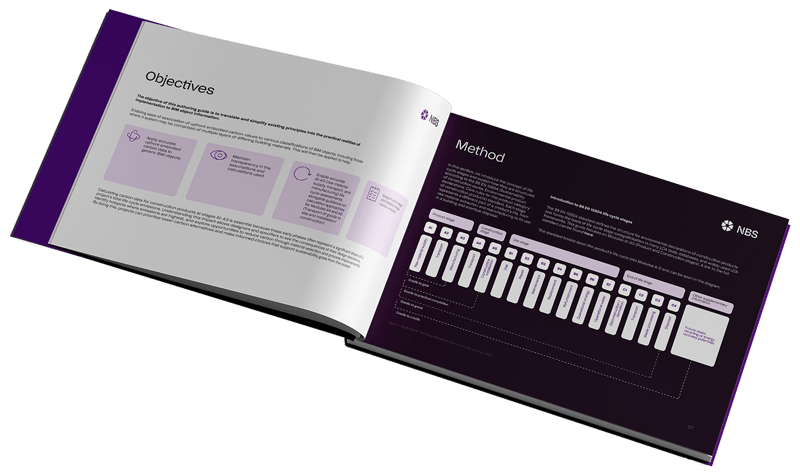
Learn how to apply embodied carbon data consistently across BIM workflows. Developed by NBS and Circular Ecology, this free guide sets out a practical, standardised approach to calculating the embodied carbon of building materials and products, helping project teams and manufacturers use carbon information with greater consistency and transparency.

embodied-carbon-calculations-guide-tile-283-5-1310-757-1773748167

About the guide

The NBS Guide to Embodied Carbon Calculations helps designers, specifiers, sustainability professionals and manufacturers take a more consistent approach to embodied carbon assessment.

It sets out a clear, repeatable method for calculating embodied carbon and explains how the approach can be applied across different BIM object types, from individual materials to assemblies such as wall build-ups and more complex multi-material systems.

For specifiers and project teams, the guide helps make carbon information easier to interpret and apply during design. For manufacturers, it provides useful guidance on how product carbon data can be structured and presented so that it can be used more effectively within digital design and assessment workflows.

The guide also explains the importance of clear assumptions, declared units and recognised data sources in producing transparent and credible carbon calculations.

Architects and designers

Engineers

Sustainability consultants

BIM Professionals

embodied-carbon-calculations-guide-02

What's included?

  • How to apply A1–A3 embodied carbon factors across different BIM object types.
    How density, declared units and geometry affect carbon calculations.
  • Where to find reliable emissions factors and how to apply them.
  • How to calculate A4 transport and A5 installation emissions using industry-aligned methods.
  • How to structure BIM object properties to support consistent and auditable carbon reporting.
  • How manufacturers can present product carbon information in a way that supports its use in digital design and specification workflows.

Download now