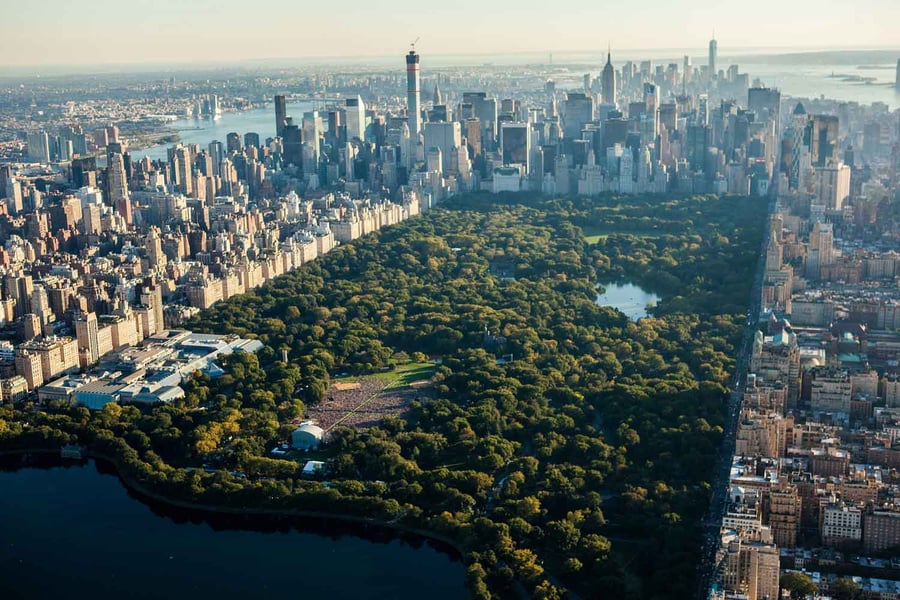
Back in 1839, public health expert J F Murray published his article The Lungs of London, in Blackwood’s Edinburgh Magazine. Even then, city dwellers appreciated the advantages of open, green spaces. Murray described the benefits of the parks of London as “great vehicles of exercise, fresh air, health, and life to the myriads that congregate in the great metropolis”.
Living in cities offers numerous advantages in terms of employment, education, healthcare and social communication, among others. But urban living also comes with its challenges: in particular, urban environments can put a strain on mental and physical health, because they tend to be noisy, polluted, overcrowded and hot.
Ecologists are increasingly turning their attention to urban areas, in an effort to find solutions to these problems. Their work is beginning to show us how cities can be designed to accommodate all the advantages – and minimise the disadvantages – of urban living.
A public service
Specifically, urban ecologists are considering how we can enhance “ecosystem services” for those living and working in cities. It is now widely recognised that ecosystems – including urban ecosystems such as parks, protected areas and waterways – provide essential services for people. Temperature regulation, air purification, noise reduction, human well-being, carbon storage (both above and below ground), water infiltration, agricultural production, pollination, and pest control are examples of the services that urban ecosystems can provide.
Of course, besides services there are also so-called disservices, such as noise pollution and high temperatures, that can be associated with open spaces. For instance, some people find that the dawn chorus of birds in spring affects their sleep patterns, or that they suffer from hayfever when there are high pollen counts.
But now, armed with an understanding of ecosystems and the services they provide, ecologists are now able to shine some light on a central question in urban planning: should cities be designed so that intensive and extremely compact urbanisation sits alongside separate, large, continuous green spaces – an approach known as “land-sparing”? Or, is it better to adopt “land-sharing”, where compact green spaces are scattered throughout the urban sprawl?
New research
A recent study by researchers from the University of Exeter and Hokkaido University, Japan, found that land-sparing is the most effective approach to maintain the majority of ecosystem services. But they also recognise that some degree of land-sharing is important, especially when it comes to the ecosystem services that benefit our well-being.
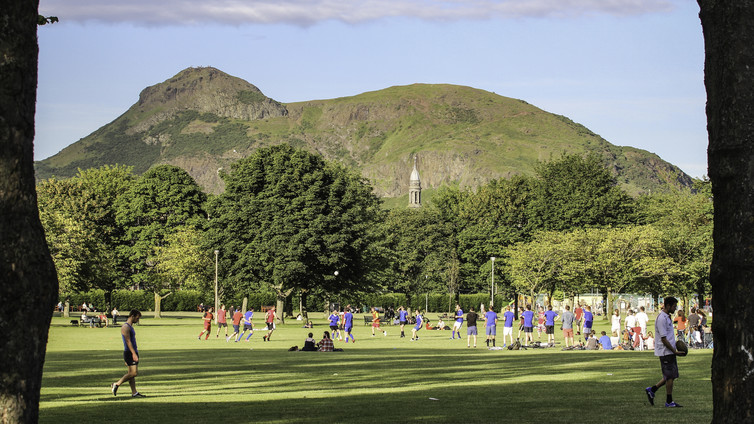 A bit of both. Lawrence OP/Flickr, CC BY-NC-ND
Being near high-quality green space can provide important health benefits, as well as “cultural ecosystem services”, such as places for recreation, spiritual and religious enrichment, education, cultural heritage, inspiration, social gatherings, and cultural diversity. If a city is to provide these services, it needs to be designed so that people can quickly and easily access green spaces as part of their everyday activities.
The authors of the study concluded that the best way to ensure the optimum distribution of development and green space is to take a top-down, policy-led approach. Changing the design of a city is no easy matter, but we know from experience that it can be done.
Sharing or sparing?
As far back as 1809, architect John Nash began work on Regent’s Park in London, where much of his input can still be seen today. In 1858, Frederick Olmsted won the competition to design Central Park in the heart of New York. And in the 1870s, Baron Haussmann – who was charged with redesigning Paris – wanted to join the Bois de Boulogne with the Bois de Vincennes to make a green belt around the city.
These are all perfect examples of land-sparing, but it is worth noting that these green spaces were established when the cities were already in the process of being redesigned.
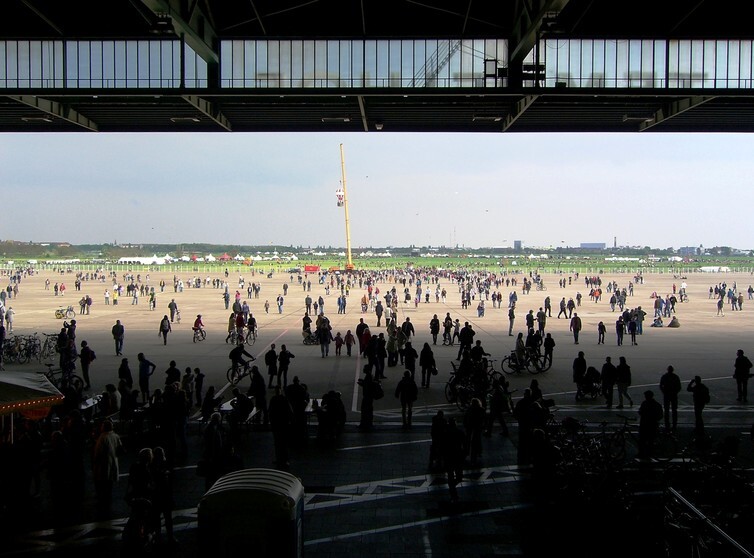 Tempelhof Park in May 2010. Times/Wikimedia Commons, CC BY-NC-SA
A more recent example of land-sparing is the 300 hectare Tempelhof Airport in Berlin. The site was earmarked for development, but the public voted to retain it as a large, open, green space in May 2014. Ingo Gräning, of the state-run Tempelhof Project stated: “No other city would treat itself to such a crown jewel [of open space]”.
Of course, not all cities have enough available land to “treat” themselves in this way. In densely-built cities like Hong Kong, the opportunity to create large open spaces may never arise. Berlin is an exception – many cities do not have the option of dropping a large park into a built-up area, and in most cases it is not feasible to combine lots of small parks and gardens into a large green area. A lot depends on the history of a city and its geography, and land-sparing is not an option for every location.
Ebenezer Howard – the first modern urban planner theorist – recognised this, when he initiated the Garden City movement in 1898. His aim was to bring the advantages of nature to city dwellers, by introducing compact green areas and small parks into cities. The first examples of Howard’s organised land-sharing can still be seen today, in the UK towns of Letchworth and Welwyn.
So when asking ourselves which approach is best, there is no straightforward answer. Whether land-sparing or land-sharing is most effective will depend on the context; factors such as the shape of the land and the existing developments in the area will all play a part. But there is no doubt that cities benefit from the services offered by urban ecosystems, and both land-sparing and land-sharing are important means of providing these advantages.
Main image: Anthony Quintano/Flickr, CC BY
This article by Philip James, Professor of ecology, University of Salford was originally published on The Conversation. Read the original article.