The NBS BIM Object Standard defines requirements for the information, geometry, behaviour and presentation of BIM objects, and enables greater collaboration across the construction industry. In addition, BIM template files and the Shared Parameter file have been developed to align with the standard, and are also available for download.
Download the NBS BIM Templates
How NBS BIM Templates can help you
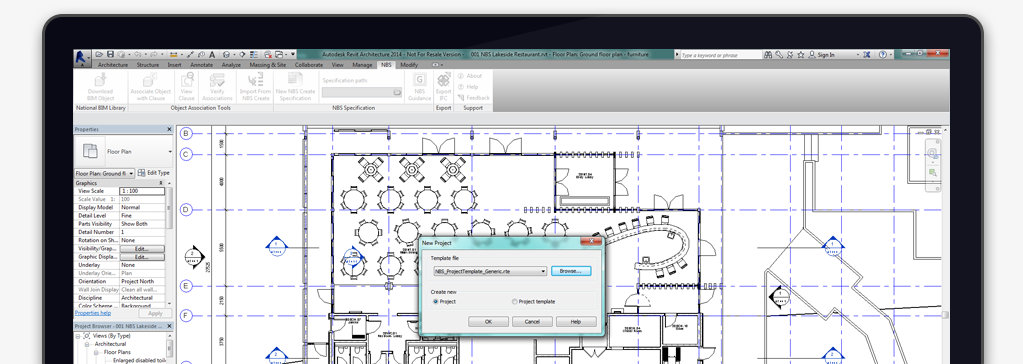
NBS Templates for Autodesk Revit can be used to streamline the adoption of the NBS BIM Object Standard by eliminating the need to load each shared parameter individually and manually sort properties into the correct groups.
When used alongside the NBS Shared Parameters file, the NBS Templates will provide consistent data standards and parameter GUIDs (globally unique identifiers) across your organization.
How to use NBS BIM Templates
To use the template files, simply download the zip file containing the set of templates and save them to your ‘Templates’ folder for the next time you create a Revit family or start a new project.
To create a new system family, for example wall or floor assemblies, open the project template, navigate to the desired type in the project browser and copy it into your current project.
NBS BIM Template files
The following table lists the templates available in the download, potential uses for each template and information contained within. There is one project (.rte) file and seven family template (.rfa) files.
| Template name | Uses | IFC | IFC Export | COBie | NBS_General |
| NBS_Project_Template_Generic | Project template with preloaded family types including wall assemblies, and wall coverings. | Pset_Covering Ceiling Pset_Covering Common Pset_Covering Flooring Pset_Slab Common Pset_Roof Common Pset_Wall Common |
✓ | ✓ | ✓ |
| NBS_FamilyTemplate_Generic | Unhosted families for general use | To be added by user. | ✓ | ✓ | ✓ |
| NBS_FamilyTemplate GenericCeilingBased |
Ceiling-based families for general use | To be added by user. | ✓ | ✓ | ✓ |
| NBS_FamilyTemplate GenericFaceBased |
Face-based families for general use | To be added by user. | ✓ | ✓ | ✓ |
| NBS_Template_GenericFloorBased | Floor-based families for general use | To be added by user. | ✓ | ✓ | ✓ |
| NBS_FamilyTemplate_GenericLineBased | Line-based families for general use | To be added by user. | ✓ | ✓ | ✓ |
| NBS_Template_GenericRoofBased | Roof-based families for general use | To be added by user. | ✓ | ✓ | ✓ |
| NBS_FamilyTemplate_GenericWallBased | Wall-based families for general use | To be added by user. | ✓ | ✓ | ✓ |
Related articles
These related articles on NBS BIM objects and shared parameters will help you with applying the NBS BIM Object Standard to your daily work:
- NBS BIM objects
- Shared Parameters
Download the tables
The current status of the classification tables is listed below. (See also: change log)