
NBS National BIM Report 2017
The annual NBS National BIM Report is now recognised as one of the industry’s most comprehensive reviews into the use of BIM. Now in its seventh year, the latest report is packed with a range of insight and expertise, it gives a snapshot of the changes the industry has been going through since the BIM mandate was implemented in April 2016.
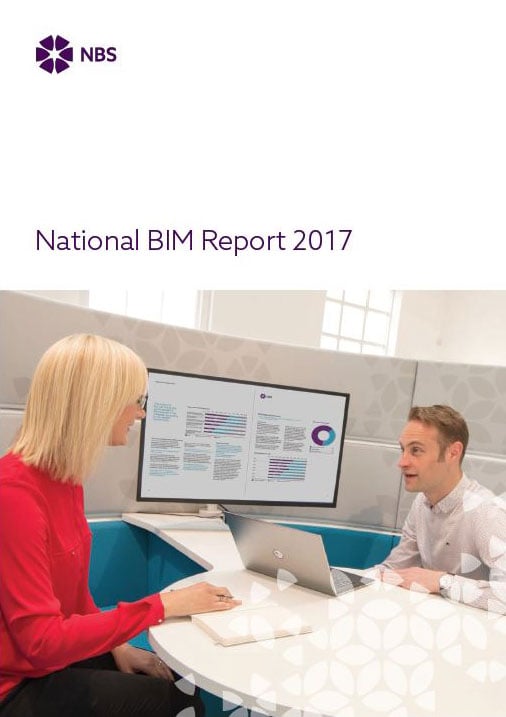 Among the headline statistics in this year's study are the fact that:
- A majority of respondents (51%) think that the Government is on the right track with BIM and awareness is near-universal and adoption is up (62% of practices use BIM on some projects - up 8% year on year). Indeed, the year just gone has seen the most rapid BIM growth since 2014. 78% see BIM as the future of project information. There is, however, work to do - 65% said BIM can bring real benefit beyond the design stages but 72% believed clients don't understand these benefits.
- Government hopes that BIM will help in delivering projects for lower cost, more rapidly, with fewer greenhouse emissions and a better trade balance for construction projects. Our survey showed that 60% of respondents think that BIM will help bring time efficiencies, reducing time from inception to completion, 70% believe cost reduction in the design/build/maintain lifecycle will be realised. Those who responded were, however, less convinced on BIM's ability to reduce greenhouse gas emissions (44% agreed) or improve the trade gap (32% agreed).
- A majority thought the Government was failing to enforce the mandate. A third of respondents stated they were not clear on what they had to do to comply with the BIM mandate. Many cited a lack of client education limiting the effect of the BIM mandate to fully reap the fullest rewards. Across the board nearly 18% of respondents said they used BIM on every project - 29% said they used BIM on more than 75% of projects. Our survey shows that once BIM is adopted it usually becomes the design methodology of choice.
As well as findings from the survey, the free-to-download report includes expert insight and analysis, including:
- An introduction from NBS CEO Richard Waterhouse
- A summary of this year's findings from the NBS National BIM Survey
- Exclusive feature content including;
The journey to Level 3 BIM and Digital Built Britain,
A look at the standards supporting UK innovation,
The progress made by the EU BIM Task Group towards a unified approach to BIM in Europe,
Scotland's journey to the digitisation of construction
A case study exploring how Manchester City Council's supply chain is using BIM on their schools programme.
Download the NBS National BIM Report 2017
We're also producing a special version of the NBS National BIM Report 2017 for manufacturers. If you'd like us to let you know when this version of the report is published then tell us your e-mail address and we'll be in touch.
Let me know when the Manufacturers' version of the
NBS National BIM Report is published
NBS Specification Report 2017
In November 2016 we launched our latest survey in a bid to understand how the industry is changing the way it writes specifications as it continues to adopt digital ways of working.Our Specification Report serves as a way for construction professionals to inform the industry about their changing needs when it comes to specification writing. The findings also help NBS to improve the tools and resources we provide.
 Among the headline statistics in this year's study are the fact that:
- 4 out of 5 specifiers tell us they are very or quite confident in their specification writing knowledge and skills
- 6 out of 10 rush the specification writing process, but do respondents consider them a chore?
- Specification difficulties are increasing – 94% have experienced difficulties when producing or using specifications
We also explore what the future might look like for specifications: including views on whether BIM will eventually replace specifications.
As well as findings from the survey, the free-to-download report includes expert insight and analysis, including:
- An introduction to the report from NBS CEO Richard Waterhouse
- The alternative to last minute specification, Stephen Hamil, Director of Research and Innovation, NBS
- 15 reasons why specifications are still important, Tina Pringle, Head of Technical Information, NBS
- A collection of views from around the industry including:
- Stewart Lunnis, Leander Design architecture + interiors
- Mark Taylor, Allies & Morrison
- David Wigglesworth, SFS intec
- Andy Jobling, Levitt Bernstein
- The legalities behind specifications, Sarah Wilson and Bal Manak, Watson Burton LLP
- The team writing NBS share their experience working in the industry and producing specifications
Download the NBS Specification Report 2017
We've also produced a special version of the NBS Specification Report 2017 for manufacturers - What Specifiers Want.