banner-image-bourne-amenity

Bourne Amenity NBS case study: Finsbury Circus Gardens

Jul 23, 2026 |Admin |3 Minute Read

Bourne Amenity recently supported the restoration of London’s Finsbury Circus Gardens by supplying specialist soils, bark and materials for the soft landscaping works, providing the right foundation for the new planting and lawn areas.

Finsbury Circus Gardens is London’s oldest public park, situated in the City of London between Moorgate and Liverpool Street Stations.

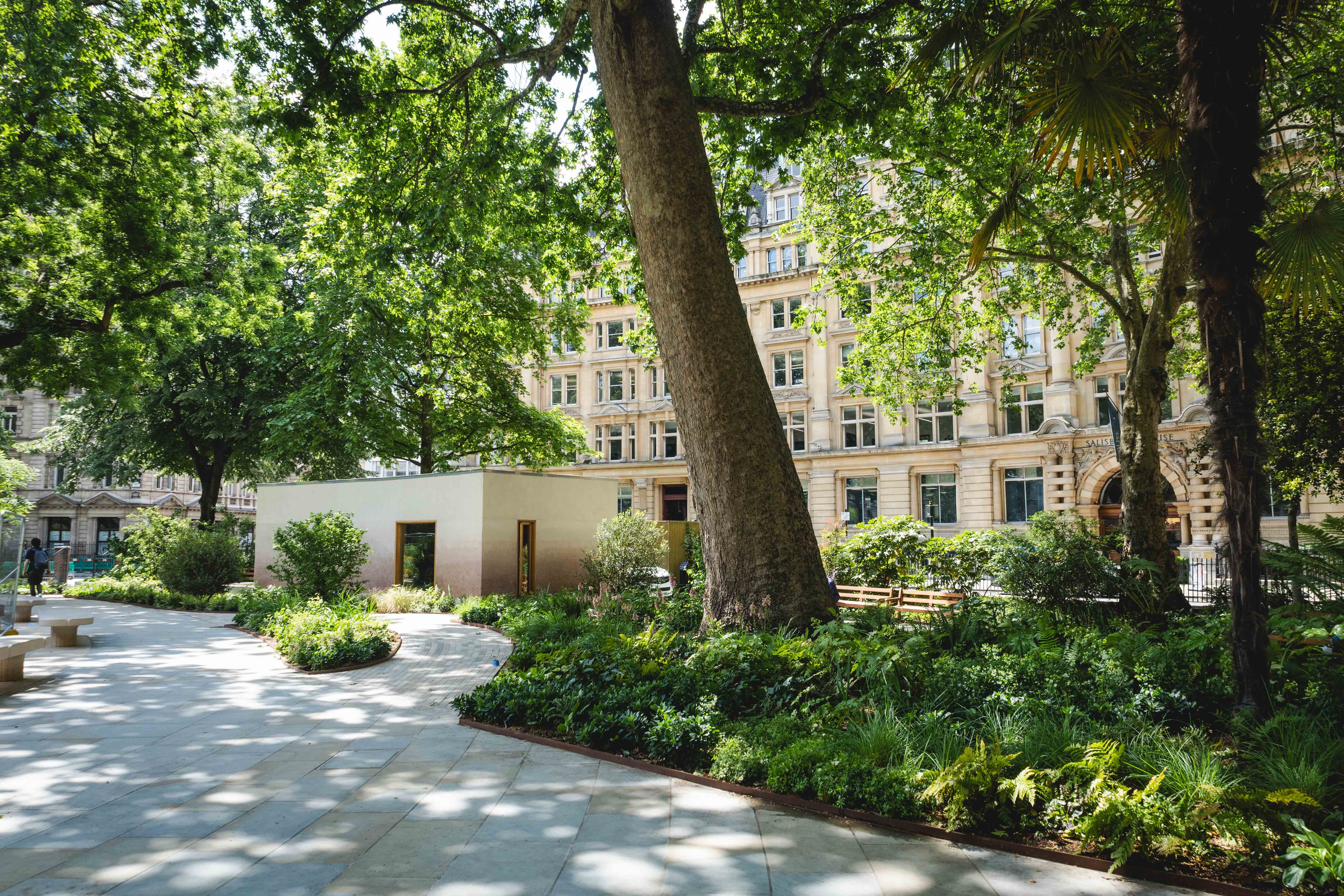
The recent restoration of the gardens was needed to conserve the park's rich history while also making the space fit for modern use. Delivered for the City of London Corporation, with Realm as architect and Maylim as main contractor, the project focused on revitalising the landscape, improving accessibility for visitors, and creating a green space that encouraged biodiversity and wildlife.

Bourne Amenity supported the scheme by supplying specialist soils, bark and materials for the soft landscaping works, providing the right foundation for the new planting and lawn areas.

Background

The restoration formed part of the City of London Corporation’s Cool Streets and Greening Programme, which aims to improve the resilience of streets, parks and open spaces to mitigate the impacts of climate change. At Finsbury Circus Gardens, this meant creating a landscape that felt refreshed and more usable, while still sitting comfortably within its Grade II-listed setting.

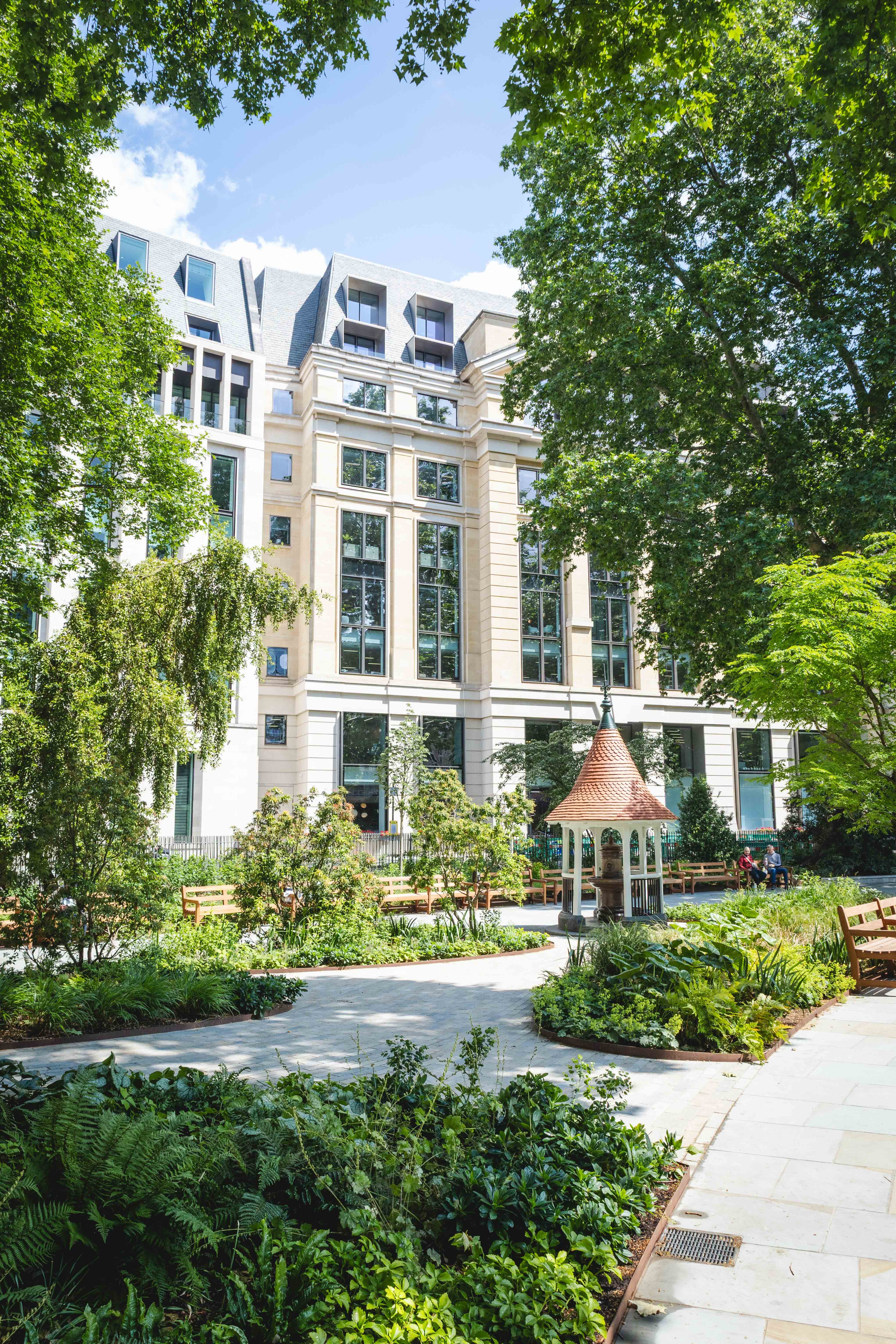
The design introduced new planting spaces, accessible paths, and seating around the central lawn. These upgrades created a welcome contrast to the busy street environment in the surrounding areas. For a site with such a long history, the challenge was not simply to make the gardens look new, but to make them work better without losing their character.

Challenges

Finsbury Circus Gardens presented a number of practical challenges. Existing trees had to be protected throughout the works, with root systems influencing how areas of the site could be approached. The gardens had also been used during Crossrail construction, which raised additional considerations regarding soil conditions and drainage.

For the soft landscape elements to succeed, material selection needed to support both the design intent and the long-term performance of the finished gardens. New planting areas required a suitable growing medium.
BourneAmenity-image-1-HEADER

Solution
Bourne Amenity supplied a range of specialist landscape materials for the Finsbury Circus Gardens project, including premium TS6 5mm BS3882 topsoil, free-draining subsoil, lawn topsoil and 0–10mm composted bark fines. Bourne Amenity also removed a proportion of the site-won soil and ameliorated it with 25% compost before returning it to the park. Reusing the material in this way reduced waste while improving the soil for the reinstated landscape. 

Each material was selected to support a specific part of the landscape build-up. Free-draining subsoil helped provide a suitable base for planted areas where drainage performance was an important consideration, to prevent flooding and waterlogging in the park. 

The ameliorated site-won soil supported the new planting scheme by providing a growing medium suited to the establishment and continued assurance of plant health. 

For the grassed areas, including the central lawn, Bourne Amenity supplied lawn topsoil suited to areas of higher foot traffic. The team worked with Tim O’Hare Associates to meet the bespoke soil specification for the project, including the incorporation of TerraCottem within the soil mix.

Across the planted areas, 0–10mm composted bark fines were applied as a natural mulch layer. By protecting the soil surface and helping it hold moisture through hotter weather, the material supported the new planting during the early stages of establishment.

Outcome
Finsbury Circus Gardens has now reopened with the addition of 12 tree species, over 13,000 plants and more than 6,000 bulbs, which will support biodiversity and provide essential habitats for London’s wildlife, including bees, birds and bats. This project demonstrates how thoughtful material selection can contribute to the long-term success of urban greening projects for years to come.


Project information sources:
https://www.maylim.co.uk/projects/finsbury-circus-gardens-restoring-tranquillity/
https://www.cityoflondon.gov.uk/services/environmental-health/climate-action/climate-action-projects/cool-streets-and-greening-in-the-square-mile
https://news.cityoflondon.gov.uk/historic-city-park-reopens-after-major-transformation/
https://www.realmlandscape.com/projects/28-landscapes/276-finsburycircus-cityoflondon
Spot1-BourneAmenity-image-2


Our latest news

Visqueen supports one of the first Gateway 2 approvals under the Building Safety Act

The Dyecoats development in Leeds marks a major milestone for the UK housing sector. The £100 million flagship Latimer Homes scheme being delivered by GRAHAM is one of the first high-rise new-build projects in the country to achieve Building Safety Act Gateway 2 approval, a crucial pre-construction sign-off confirming that the design meets all safety and regulatory requirements before work begins on site.

Building Safety ActSponsored

Five questions to ask when specifying insulated panels

Selecting an insulated panel system for an industrial building should start with the building and application requirements.

Design and SpecificationSponsored

NBS and BDP join forces to improve generic carbon data in construction

Today, NBS (part of Hubexo), the platform for connected construction information, announces a long-term strategic partnership with BDP, a major global multidisciplinary practice of architects, designers, engineers and urbanists. The partnership recognises BDP's integral role in the development of NBS LCA, a new life-cycle carbon assessment platform providing professionals with high-quality, reliable and easy-to-use carbon data to ensure accurate tracking as construction projects evolve. BDP's primary contribution to NBS LCA has been the development of more than 1,300 pre-calculated generic assemblies, covering the most commonly used building fabric elements alongside key concrete and steel structural elements. These assemblies provide whole-element carbon data, giving designers consistent, UK-relevant carbon benchmarks from the earliest stages of project design. Users can easily and instantly apply carbon rates to a range of pre-configured common building elements, including walls, floors, and roofs. Developed by BDP and NBS, the assemblies remove the need for designers to manually build up material layers or calculate individual components at the concept stage. This saves significant time and effort, enabling proportionate and responsible carbon evaluation early in the design process, when decisions have the greatest impact on a project's overall carbon footprint. BDP also participated in collaborative workshops that directly informed the development of NBS LCA, helping to shape a tool that is practical, accessible and aligned with real-world UK construction workflows. Dr Lee Jones, Head of Sustainability at Hubexo, said: “BDP's contribution to NBS LCA has been invaluable. Their depth of project experience and technical knowledge has directly shaped the generic assemblies at the heart of the platform. These assemblies give designers a reliable, UK-relevant starting point for carbon assessment, without the burden of building everything from scratch. This is exactly the kind of collaboration that moves the industry forward, and we're proud to be working with BDP on a long-term basis.” Julia Yao, Associate, Sustainability Consultant at BDP, said: “Carbon assessment needs to be embedded in design from day one, not bolted on at the end. Working with NBS to develop its LCA product has been a genuine opportunity to put that principle into practice. The generic assemblies we developed draw on real project data and are designed to give designers meaningful, actionable carbon information at the concept stage. We're delighted to see them at the core of a platform that will be used across the industry.” With the UK Government outlining its commitment to responsible carbon reporting through its Carbon Budget and Growth Delivery Plan, professionals need reliable, easy-to-use tools to assess and report embodied carbon. NBS LCA addresses this need by integrating carbon calculations with live design work, drawing on structured data from Circular Ecology's ICE Database and more than 12,500 verified, specification-ready construction products with Environmental Product Declarations (EPDs) from NBS Source and ECO Portal. Over the coming months, NBS and BDP will continue to develop their partnership, with a shared commitment to improving the quality and accessibility of carbon data for construction professionals across the UK. NBS LCA is available now, with flexible subscriptions designed for all professionals. For more information, visit the website here.

Product update