
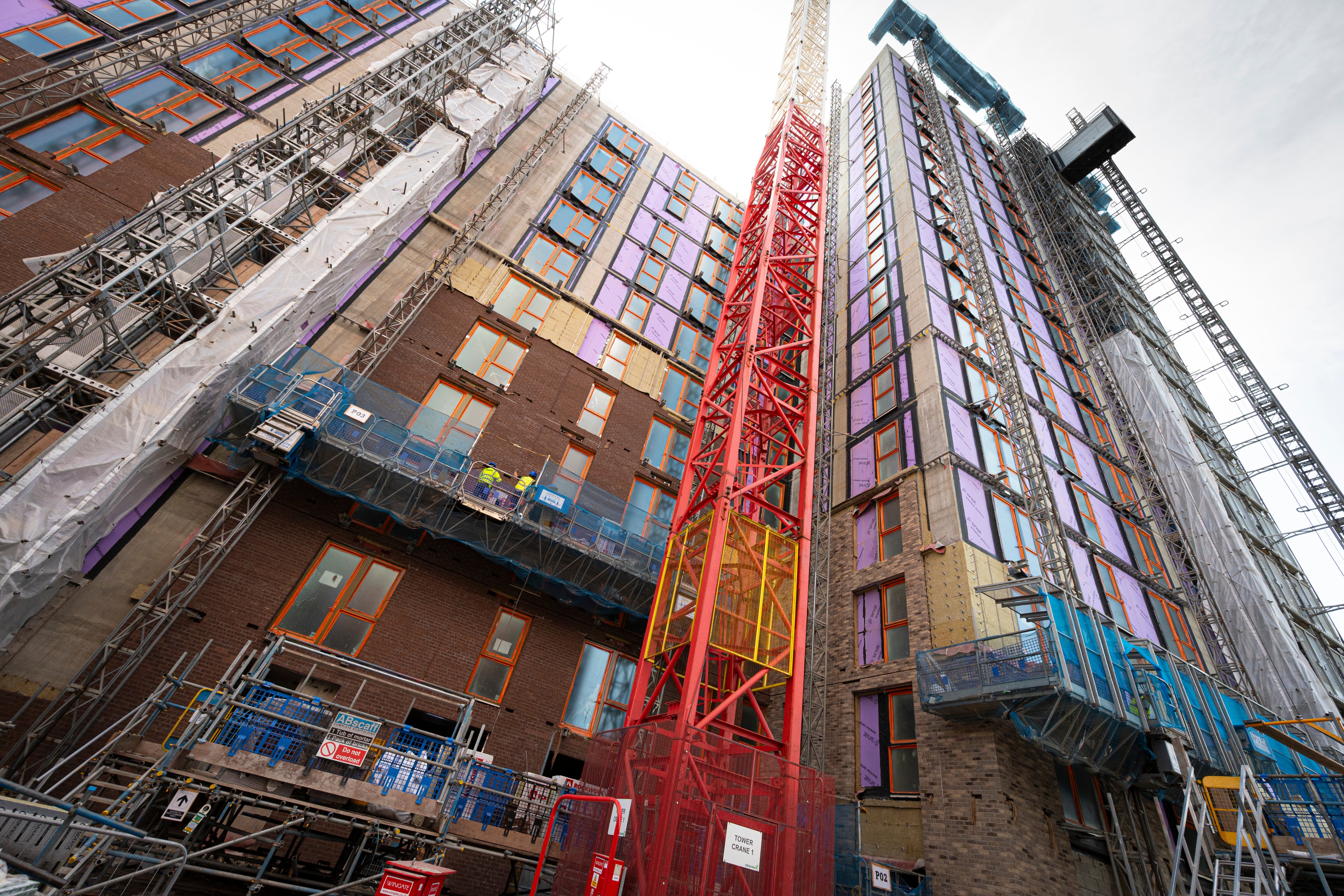
The Dyecoats development in Leeds marks a major milestone for the UK housing sector. The £100 million flagship Latimer Homes scheme being delivered by GRAHAM is one of the first high-rise new-build projects in the country to achieve Building Safety Act Gateway 2 approval, a crucial pre-construction sign-off confirming that the design meets all safety and regulatory requirements before work begins on site.
Forming part of the city’s wider regeneration along Kirkstall Road, Dyecoats will transform a disused brownfield site into a sustainable, mixed-use neighbourhood of over 1,800 homes, complete with community facilities, commercial space, and public realm. With such scale and visibility, achieving early compliance was essential.
Phase 1 will deliver 434 new apartments across three buildings, including social/shared-ownership and private units, along with commercial space, a food hall, and a new pedestrian bridge.
A specification built on safety
To support the project’s Gateway 2 submission, main contractor GRAHAM required a non-combustible damp proof course system that could meet the stringent performance criteria of the new legislation while providing proven long-term reliability.
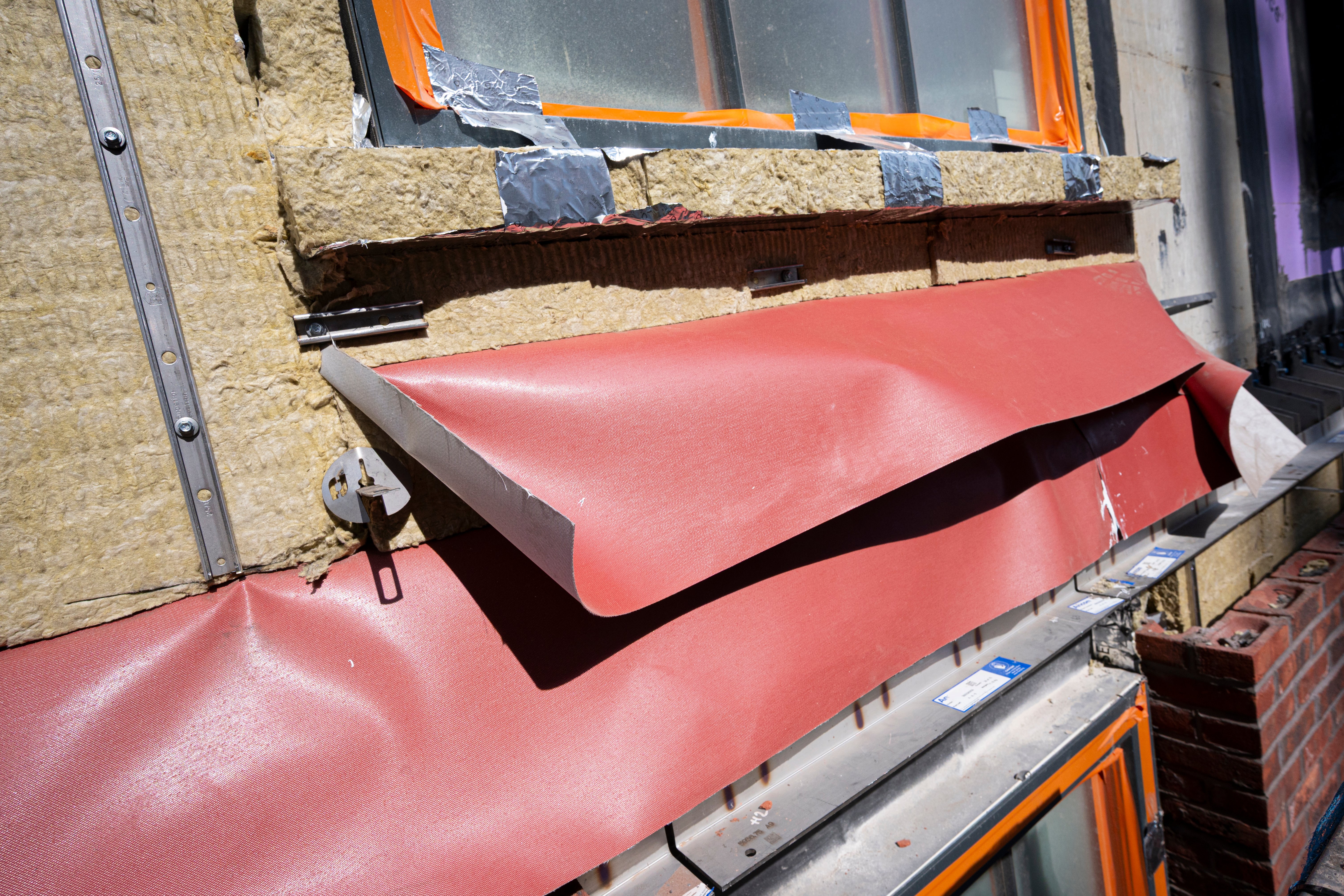
Visqueen supplied its Visqueen Zedex Non-Combustible DPC Cavity Tray system, a Class A2 fire classification solution independently tested to BS EN 13501-1, meeting the stringent performance requirements for high-rise residential applications.
The product’s fire-safe composition, durability and third-party accreditation made it ideally suited to the development’s design, ensuring that key interfaces met the highest standards of safety and traceability now required under the Building Safety Act.
Embedding the golden thread
Under the new regulatory framework, every element of a build must be justified, documented and traceable. Visqueen worked closely with GRAHAM and sub-contractor Keith Walton Brickwork Ltd to integrate its system data directly into the project’s digital record, maintaining the ‘golden thread’ of information from specification through to installation.
To further support compliance, Visqueen delivered dedicated CPD training seminars for all subcontractors on site. These sessions focused on correct installation methods, detailing requirements, and the wider implications of the Building Safety Act for material traceability. The manufacturer also produced on-site sample boards and fixing guides, enabling contractors to visualise correct practice and achieve a consistent standard across multiple blocks.
All installation and inspection records were logged in line with Gateway 2 evidence requirements, maintaining the project’s digital compliance trail.
Collaboration in practice
Stephen Sharpe, Quality Manager at GRAHAM, explains:
“The Dyecoats development demanded complete transparency across every part of the build, from product testing to on-site execution. Visqueen’s non-combustible DPC system offered a fully compliant solution, backed by the technical expertise we know we can rely on. Their training sessions and sample installations made sure everyone on site understood exactly what was required under the Building Safety Act.”
This collaborative approach between manufacturer, contractor and sub-contractor reflects the new culture of accountability that the legislation aims to embed. By working directly with design and delivery teams, Visqueen ensured that product data, installation quality and regulatory documentation remained aligned throughout the programme.
Supporting safer design through education
As one of the industry’s leading providers of structural waterproofing and gas protection systems, Visqueen recognises that compliance now extends far beyond product certification. The manufacturer’s investment in technical training, on-site guidance and digital data integration helps architects and contractors meet their statutory responsibilities and reduce the risk of specification change later in the build process.
James Walsh, Technical Support Manager at Visqueen, says:
“The Building Safety Act has fundamentally changed the way our sector approaches design responsibility. Gateway 2 approval requires every material choice to be justified and traceable, which is exactly where manufacturers can add real value. By combining compliant products with clear data and education, we’re helping our partners design and build with confidence.”

Building confidence for the future
As one of the first projects to achieve Gateway 2 approval, Dyecoats demonstrates how early collaboration and robust specification can deliver compliance without compromise. Visqueen’s Zedex Non-Combustible DPC System provided a critical component in meeting the scheme’s fire-safety objectives and maintaining the integrity of the building envelope.
Through its proactive technical support, CPD delivery and commitment to transparent data, Visqueen continues to help contractors and developers navigate the evolving demands of the Building Safety Act, reinforcing its reputation as a trusted partner in creating safer, high-performing buildings for the future.
For more information on Visqueen and its full product range of solutions, visit https://visqueen.com or Visqueen’s NBS page: Visqueen | Products | BIM Library.