Practical examples of how to develop and coordinate information on a BIM project

Practical examples of how to develop and coordinate information on a BIM project

Jul 20, 2017 |Richard McPartland

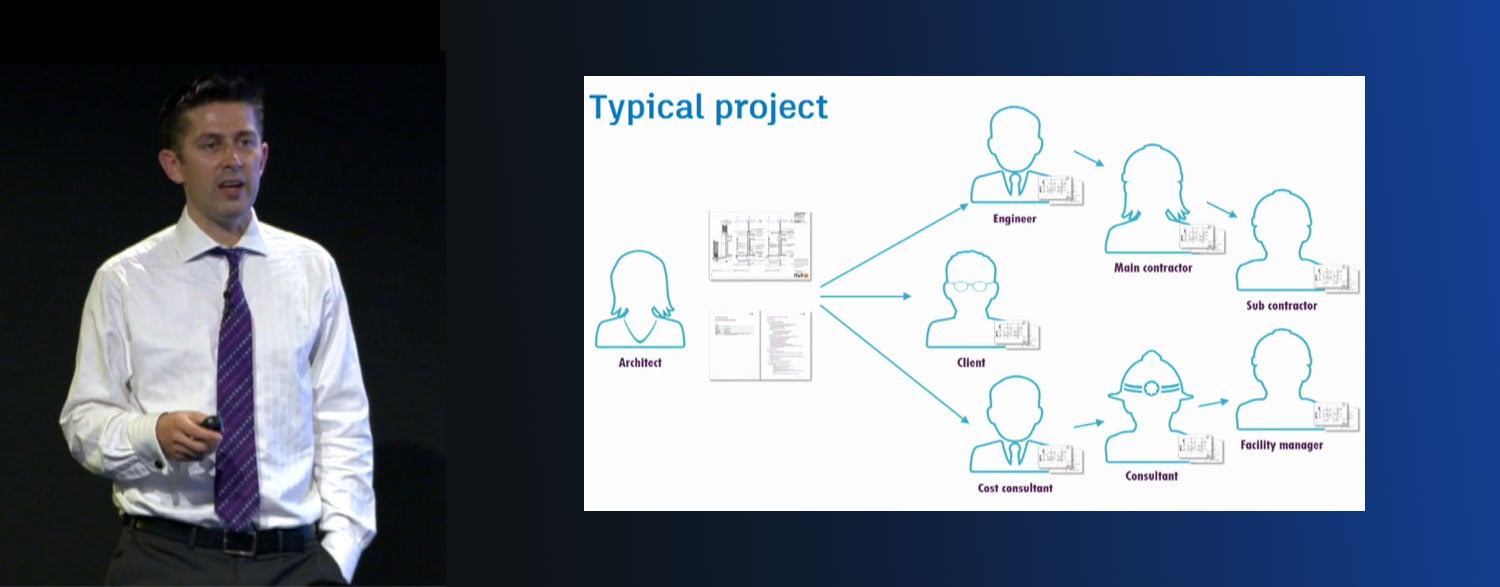
Speaking at this year's Autodesk University London event, Dr Stephen Hamil, Director of Research and Innovation at NBS, presents Practical Examples of How to Develop and Coordinate Information on a BIM Project.

The session explores:

  • How to agree who is developing what information and when on a BIM project
  • How Revit users can standardise their BIM objects
  • How Revit users can coordinate specifications and models
  • How the cloud is changing the way that we collaborate and how Forge can help

Stephen shows in practical detail how  project teams can collaborate to develop information on a BIM project. He starts by looking at setting up a plan of work to give clarity on which team members are delivering what information and when. The session goes on to look at how designers can develop their designs using standardised BIM objects in Revit. Practical examples are then be given on how to link these objects digitally to the associated specification to better coordinate this information and reduce risk. The session finishes by exploring the role of the cloud and big data in future workflows and show practical examples of how the Autodesk Forge platform can accelerate this. 

View session video and download handout materials

What to read next

Autodesk Unversity London in words and pictures
The future of making things came under the spotlight at Autodesk University London. We share some words and pictures from day one of the event.

The hot topics we discussed at Autodesk University London
We share the main talking points from our discussions on the future of digital construction at Autodesk University London this week.

Five things we learnt at Autodesk University 2016
What happens in Vegas doesn't have to stay there. We share five key takeaways from the 2016 Autodesk University event, complete with links to watch some of the best sessions online.

Our latest articles

Uniclass - October 2026 update

Classifying the natural environment

UniclassClassification

Visqueen launches Ultimate Self Adhesive Membrane for hydrocarbon and VOC-contaminated sites

The construction industry faces growing challenges when building on increasingly complex brownfield sites. Alongside the need for effective waterproofing, developers and contractors must now address a wider range of ground contaminants, including hydrocarbons, volatile organic compounds (VOCs), and hazardous ground gases, while maintaining programme efficiency and installation quality. Against this backdrop, Visqueen has expanded its gas protection and waterproofing portfolio with the launch of Visqueen Ultimate Self Adhesive Membrane, a new hydrocarbon and VOC-resistant self-adhesive tanking membrane. Developed as the latest addition to the Visqueen non-foil gas barrier range, the new membrane combines proven gas barrier and waterproofing performance to help specifiers address multiple site challenges with a single solution.

Construction ProductsSponsored

Siderise: Helping to bridge the gap between Gateway 2 approval and on-site fire protection

While the new building safety regime hasn’t fundamentally changed what requirements higher-risk buildings (HRBs) must meet to comply with the Building Regulations, it has significantly increased the breadth, depth and volume of evidence that must be supplied to demonstrate this. As a result, project teams have had to adapt the way they work and even look beyond their roles to understand how their actions may impact the next Dutyholder in the chain. For specifiers, this can include considering what supporting services are offered with life safety-critical elements to enable correct design, installation and maintenance. Early engagement with manufacturer technical specialists can help identify any practical challenges that may arise onsite. Then, during construction, these services can help support the translation of design intent into reality so that buildings are safe for occupation.

Construction ProductsSponsored