It’s a sympathetic, elegant and highly effective retrofit solution, but when it comes to secondary glazing, there’s a lot to consider. So, Selectaglaze has put together these five key questions you should be asking before you start your specification.
1. Why secondary glazing?
Whatever you’re looking to achieve, your answer will have an impact on: the style of secondary glazing, the type and thickness of glass, the cavity between the primary and secondary glazing and your choice of fixtures and fittings.
The chances are, you have chosen this route because you don’t want to (or, in the case of listed and heritage buildings, aren’t permitted to) replace primary windows. But there are many more reasons.
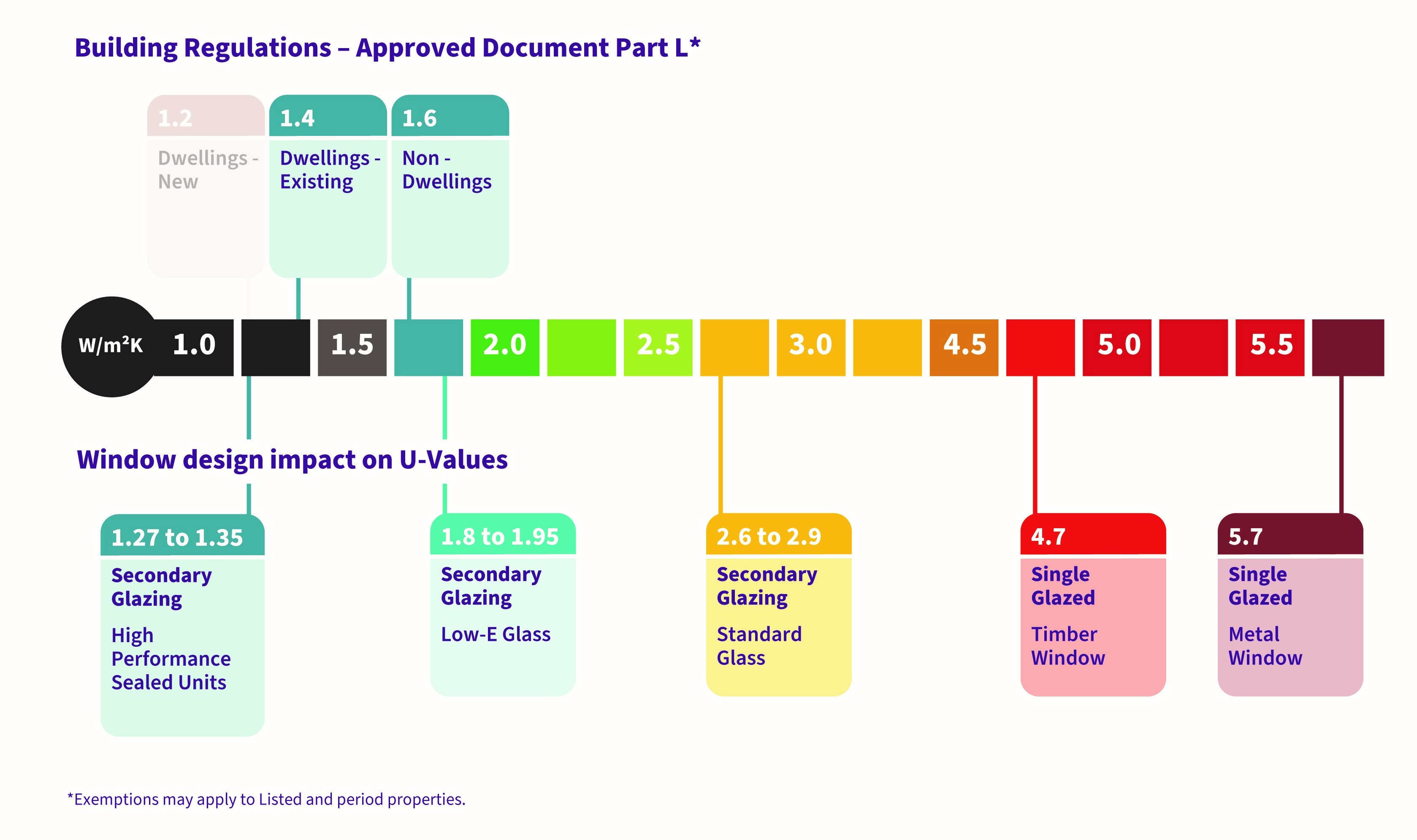
Want to improve property warmth? Eliminate draughts? Achieve a higher energy efficiency rating? All three at once? The answer is bespoke secondary glazing which is fitted to tight tolerances and has double brush or compression seals.
For increased energy efficiency, consider low-E glass, which reflects infrared heat back into the room instead of letting it pass through the window. For even better results, invest in high performance sealed units.
Want to keep the noise down? The key thing to consider is the cavity between the primary and secondary window – the greater the better. If this isn’t possible, you’ll need thicker glass with greater density. Naturally, this will reflect on the type and style of secondary glazing – for example, slimline or heavy-duty. Alternatively, acoustic laminated glass is an option.
Looking to improve security? Consider adding simple locks or a laminated glass – and remember, not every window will need the same level of security.
For added peace of mind, think about security certified products for physical attack including Secured By Design (SBD) for low level security, or Loss Prevention Standard (LPS) products for high level security.
Is your property a potential terrorist target, or will it be affected by Martyn’s Law? You can protect against ballistics, bomb blasts and fire with robust frames and explosion-resistant glazing.
2. What are the primary windows like?
Casement? Vertical sliding? Sash? Tilt & turn? Bay? Bow? Skylight? Arched Gothic? Is there a reveal? Are there blinds, curtains, kitchen taps, pelmets, bulkheads or furniture immediately in front of the opening? There’s a lot to consider.
Whether standard shapes and sizes or bespoke designs, the style of window will impact on the choice of the most suitable and sympathetic profile option. For example, if the primary windows are vertical sliding box sashes, you can mirror this with vertical sliding secondary glazing. With larger openings, you can couple several different styles of units – Selectaglaze's bespoke range of coupling sections can be used to accommodate this.
3. What about listed properties?
Before you make any plans, contact the local authority to speak with a conservation officer to see if you need to apply for Listed Building Consent. You can also get advice and support from your regional Historic England office. While secondary glazing is a sympathetic and reversible adaptation, with minimal visual impact to a property, you will still need to do this.
Remember, you’ll need to be careful with your choice of finish and colour so that your secondary glazing blends in with the primary window and overall interior aesthetic. As mentioned above, a chat with a conservation officer is advisable, and this Historic England guide is invaluable.
4. How will the secondary glazing be used?
Will your client need window access for regular cleaning or ventilation? If yes, you’ll need an openable solution – this could be vertical or horizontal sliding or inward opening casement. Do the openings require only occasional access? If the size and location are appropriate, consider a lift-out unit (but remember that even the lightest casement can require a little heavy lifting).
There are many more questions to ask yourself. Is the secondary glazing easily accessible? Should there be a minimum opening requirement for safety purposes? Can the windows be cleaned easily – and will this be from the outside or internally? Will there be blinds or curtains to hang, or fitted furniture to consider? It may start to be a little daunting – but don’t worry. Choose your secondary glazing provider wisely, and you’ll get plenty of help.
5. Who can give you the answers?
Selectaglaze has a proud and long history of working on some truly spectacular listed and heritage retrofit projects, with an extensive range of standard and bespoke products – including arched and shaped windows. Meanwhile, Selectaglaze special finishes and colours can help everything blend in perfectly. So whatever questions you might have about secondary glazing, Selectaglaze is there to help.
View Selectaglaze’s latest case studies or book its RIBA-approved CPD.