A wide range of interesting articles that help you make informed decisions and deliver the best projects for your clients authored by our team of NBS subject specialists and construction industry contributors.
Sustainability
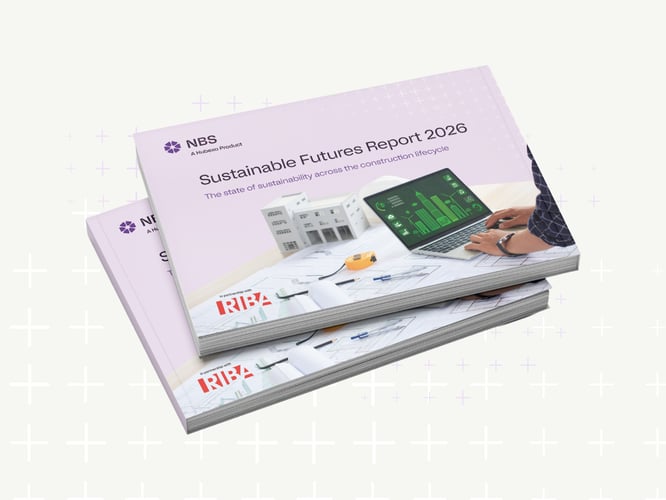
Sustainable Futures UK Report 2026
Explore the current state of sustainability in the UK construction industry based on the results from a comprehensive survey conducted by NBS.
Must Reads
RIBA CPD
RIBA CPD for Architects: Understanding Flooring Specification and Detailing
For architects and specifiers, flooring details can have a significant impact on the safety, accessibility, durability and overall performance of a building. Yet the technical considerations ...
Sponsored
Designing sustainability into construction – proof over promises in sustainable construction
With tightening regulations and growing client demand, the construction industry is under increasing pressure to demonstrate measurable progress against carbon reduction targets. For specifiers, that ...
Construction Products
Dulux Trade launches new solution for high-humidity spaces
Because of how they are used, kitchens and bathrooms experience more moisture, more contact, and more ongoing maintenance. Standard emulsions are not designed for this level of use. Over time, ...
The benefits of using a structured approach to data
When documenting a building project there are huge benefits around using a consistent approach to structured data. Savvy clients are no longer simply asking for a bundle of paper drawings and ...
Digital TransformationUniclass
Reduce embodied carbon from the start
Measure, compare and reduce upfront embodied carbon using trusted UK data and pre-built assemblies.
To understand Uniclass2 let's start by considering what a classification system is. One of the simplest and most effective classification systems in use today is the system adopted by the dictionary. ...
Standards and RegulationsUniclass
Using Uniclass 2
Uniclass2 is nearing the final version of its first iteration, so it is time to look at how it might be used. John Gelder, Head of content development and sustainability, explores the issue.
Design and SpecificationUniclass
Co-ordinating Common Arrangement, Uniclass, NBS and Rules of Measurement
NBS Technical Author, Roland Finch, sheds light on changes to classification and rules of measurement. Are we heading for coordination or conflict?
UniclassClassification
Developments in construction classification
Construction Project Information (CPI) and RIBA Enterprises ran a couple of workshops on the forthcoming changes to Uniclass, in Manchester and London on January 31 and February 3 respectively. The ...
UniclassClassification
Revising ISO 12006-2:2001
In this article from 2012, John Gelder here considers the Uniclass parent standard, ISO 12006-2, now being revised. John is on the ISO/TC 59/SC 13/WG 2 Task force, as the UK expert (reporting to BSI ...
Classification
Subscribe
Unifying Uniclass
Proposed changes to the UK construction sector's classification system, Uniclass, are outlined by John Gelder, Head of content development and sustainability at RIBA Enterprises.
UniclassClassification
The new uniclass work sections table
Uniclass is set to change, including Table J – the Common Arrangement of Works Sections (CAWS). Here John Gelder, Head of content development and sustainability, outlines the replacement for CAWS.
Design and SpecificationUniclass
CPIC and Uniclass - who, what and why?
In a world ruled by acronyms these are just another two, but CPIC and Uniclass are important to the success of the construction industry in cutting costs and waste. Sarah Delany, CPIC Secretary and ...
Design and SpecificationUniclass
Reclassification
Many countries have classification systems for construction work. These are reviewed regularly, occasionally resulting in a radical reclassification – the February ICIS Newsletter described new ...