
Introduction
It is a common observation that the UK still thinks of itself as a ‘wet’ nation with ample reserves of fresh, flowing water. However, the droughts and significant water scarcity events of recent years have highlighted that while we still enjoy a temperate climate, the rain does not always fall where or when we want it.
As a result, water supplies in some areas of the country have dropped perilously low at times. This has led to hosepipe bans, farmers being prohibited from abstracting irrigation water from rivers, and even some canals being rendered un-navigable. This problem is likely to get worse in the coming years as climate change, population growth, and higher water demand put more pressure on our water systems.
National strategy
Water shortages have generated a renewed focus on water efficiency in the built environment. This has led various industry bodies to launch campaigns to increase awareness and influence consumer behaviour.
The Environment Agency (EA) has published The National Framework for Water Resources 2025, setting out their strategy to address the estimated shortfall of water for supply to the public of up to 5 billion litres per day, by 2055. This strategy focuses on the development of new resources (reservoirs, water recycling and de-salination) but also on improved ‘demand management’ through smart metering, mandatory water efficiency labelling (for fittings), and a review of water efficiency measures in the Building Regulations.
Legislation and standards
Building Regulations across the UK require that measures are taken to prevent ‘undue consumption of water’. This requirement is reflected in the Building Regulations guidance documents published in each jurisdiction, which recommend predicted maximum daily consumption limits per person for dwellings (to be demonstrated by calculation), and/ or limits on the maximum flowrates of fixtures (the ‘fittings approach’).
The UK water efficiency campaign organisation Waterwise, in collaboration with the Water Efficiency Strategy Steering Group, have prepared a UK Water Efficiency Strategy to 2030. Within the strategy document, Waterwise have set out their recommendations for updates to Building Regulations Part G, in anticipation of the upcoming review by DEFRA. These include reduced maximum consumption limits and fixture flowrates, setting requirements for water reuse (grey water and/or rainwater) and the creation of a new mandatory water efficiency label for fittings.
Best practice
CIBSE Guide L: Sustainability devotes an entire chapter to water use, providing consumption benchmarks from bodies such as CIRIA and the Environment Agency for residential and non-residential developments. Guide L also sets out general principles for water conservation and the order in which they should be implemented i.e.
- Reducing demand;
- Meeting demand efficiently; and
- Recycling water e.g. rainwater, grey water or black water.
The Association for Environment Conscious Building (AECB) Water Standard also offers a pragmatic approach to water and energy savings by promoting the use of lower flow fittings that still achieve the flow rates shown to be acceptable to users. This approach aims to mitigate against users objecting to the perceived poor performance of very low flow fittings and replacing these with higher flow fittings post-occupancy.
Driving change
In their report Incentivising Non-Household Water Saving, Waterwise set out some of the current incentives (and barriers) to reducing water consumption for non-household consumers.
The report highlights that while reduced water bills are an incentive, the return on investment may not attract concerted efforts by building owners and operators. However, several contributors to the report emphasize the value found in using consumption data from automatic meter reading and/ or smart meters, to inform the implementation of water saving measures.
Larger companies may be incentivised by the perceived brand or reputational enhancement that comes from demonstrating good corporate and social responsibility (CSR). An established mechanism to show this, would be for the client to request the use of a recognised environmental assessment scheme (e.g. BREEAM, LEED, etc.).
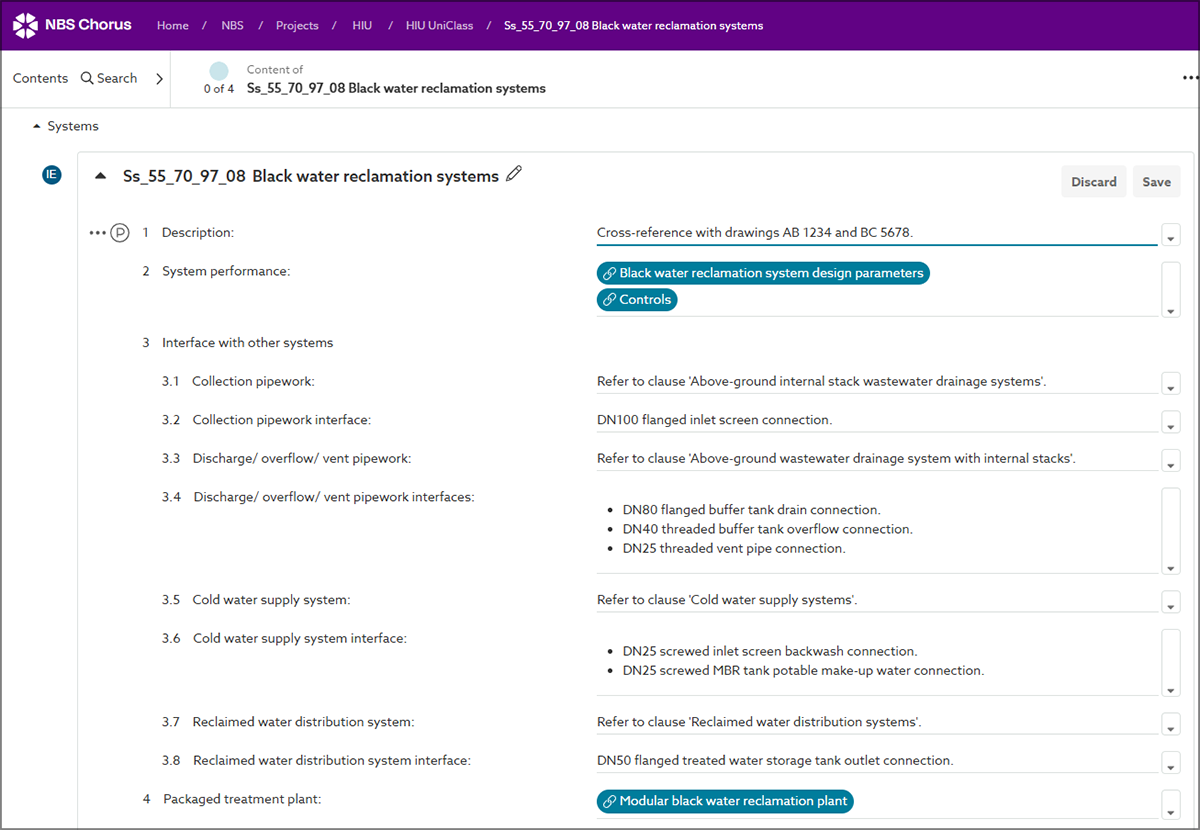
Figure 1: Specifying Black water reclamation systems
Specifying water efficiency
Systems
The use of wastewater reclamation systems such as grey water, black water and rainwater reclamation can help deliver improved results via Building Regulations water efficiency calculators such as the Water Research Centre (WRc) Part G Water Efficiency Calculator. Wastewater reclamation content has recently been updated and expanded within NBS Chorus to reflect the increasing availability of modular black water reclamation systems in the UK.
While vacuum drainage systems are not considered in the WRc Part G calculator, specification of these systems allows the use of lower flush volume WCs, thus reducing consumption. Other benefits of vacuum drainage include greater versatility of pipework routing and enhanced hygiene, due to a reduction in airborne droplets during flushing.
Environmental assessment schemes, such as BREEAM and LEED, award credits for the use of leak detection, combined with the logging and monitoring of building consumption to detect any higher-than-normal baseline flow, which may be representative of a leak.
Monitoring and management of building water consumption enables target setting and consumption reduction, which may be awarded further credits.
Within Uniclass, specifiers can use the following clauses to specify these systems:
- Ss_50_30_04_93 Above-ground vacuum drainage systems
- Ss_55_70_97_08 Black water reclamation systems
- Ss_55_70_97_35 Grey water reclamation systems
- Ss_55_70_97_70 Rainwater reclamation systems
- Ss_75_70_54_95 Water metering systems
- Ss_75_50_50_96 Water leak detection and alarm systems
The corresponding clauses within CAWS are:
- S17 Water reclamation systems
- S90 Hot and cold water supply systems
System performance
During the design stages, parameters relating to water efficiency can be captured in performance clauses, either to inform third party design of systems, or to record and demonstrate how compliance with regulations is to be achieved.
Specifiers can use performance clauses to set out performance criteria, for example, the target maximum daily water consumption per person in a dwelling, or a benchmark consumption figure for a commercial property.
Where system design is by a third-party, design clauses can be used to specify water efficient system design criteria such as maximum lengths of dead-legs, the use of recirculation systems, decentralised or centralised water heaters, etc. Reference can also be made within a design clause to relevant design standards, such as the BS EN 806 series and BS 8558.
Within Uniclass, specifiers can set out performance and design criteria using the following systems and performance clauses:
- Ss_55_70_38 Hot and cold water supply systems
- Ss_55_70_38/210 Design and detailing hot and cold water systems
- Ss_55_70_38/220 Cold water supply
The corresponding clauses within CAWs are:
- S90 Hot and cold water supply systems
- S90/210 Design
Products
Use of technologies and products which reduce the time taken to deliver water to fittings at the desired temperature (e.g. 38℃ at hot taps or 15℃ at cold taps) will reduce the volume of water run to waste while the user waits for the flow to reach temperature.
This effect can be achieved by products such as passive flue gas heat recovery (which uses waste flue gas heat to preheat the cold water feed to the hot water heat exchanger), or thermostatically actuated flow restrictors which restrict the flowrate through the heat exchanger, until the desired flow temperature is achieved.
Passive flue gas heat recovery can be specified as an accessory within the following clauses:
- Pr_60_60_08_15 Combination gas-fired condensing boilers
- T90/314 Boilers, gas-fired condensing, combination
Thermostatically actuated flow restrictors can be specified as a valve within clause:
- Pr_65_54_95_85 Thermostatic flow restrictor valves
Point-of-use hot water heaters deliver hot water quickly, and due to their immediate proximity to the fitting, distribution heat losses in pipework are greatly reduced. The volume of water run to waste is therefore minimised. This effect has been demonstrated by improved energy performance in Passivhaus projects such as the Riverside Primary School in Perth (see CIBSE journal Tapping into efficiency: Passivhaus school’s point-of-use water heaters) where point-of-use water heaters were used.
Instantaneous and point-of-use water heaters can be specified within the following product sections:
- Pr_60_60_96 Water heaters
- S90/360 Instantaneous water heaters, electric
- S90/400 Storage water heaters, electric
Heat interface units (HIUs) with a ‘keep warm’ function can achieve a similar effect to point-of-use or instantaneous hot water heaters, by maintaining a trickle flow of primary heating flow through the domestic hot water heat exchanger and thus being able to deliver hot water to taps more quickly.
Heat interface units can be specified using the following clause:
- Pr_60_60_38_36 Heat interface units
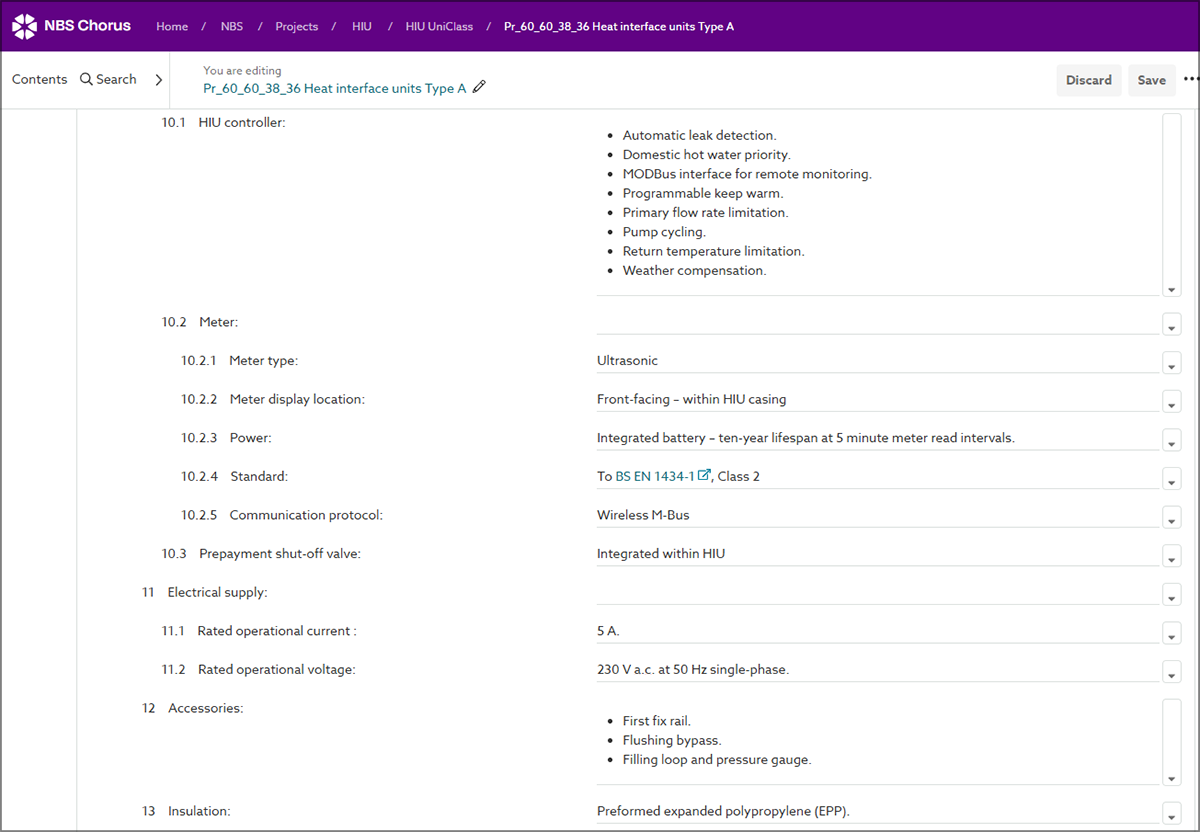 Figure 2: Specifying 'Programmable keep warm' within heat interface unit controls
Fittings
The ‘fittings approach’ to demonstrating water efficiency, is set out in the Building Regulations guidance documents and is generally considered more robust than the calculation approach. This is in part due to the ease with which the procured fittings can be verified against the requirements of the specified fittings, to ensure the correct flowrates are achieved.
Specifiers can set out the required flowrates for fittings using the following Uniclass product sections:
- Pr_40_20_87 Taps and water supply outlet fittings
Within CAWS, the following sections can be used:
- N13 Sanitary appliances and fittings
Verification of performance
Amongst the recommendations in the Waterwise position statement, regarding the upcoming review of Building Regulations Part G, is that enforcement of water efficiency measures is strengthened. The need for enhanced enforcement and verification is supported by research carried out by the Water Research centre (WRc) in 2018 which showed that from a total of 80 new build developments in Wales, none achieved compliance with water efficiency requirements of Building Regulations Part G2, despite having submitted acceptable water efficiency calculations at planning stage.
Although no industry standard technique exists for verifying the calculated maximum daily consumption (a perceived weakness of the calculation approach), specifiers can request verification evidence that design criteria have been met. This can be through design submittals, such as drawings or reports, and performance information of selected fittings.
The performance of fittings can be verified using manufacturer’s data sheets. An accurate comparison can also be provided by using recognised labelling schemes (such as the Unified Water Label (UWL)), which provide a standardised mechanism for labelling and comparing fitting performance. The use of water efficiency labelling schemes will become mandatory through the UK Government mandatory water efficiency labelling scheme.
Verification evidence of system design, system performance and product performance can be requested within the relevant clauses using the ‘Verification’ clause items.
Pre-commission cleaning and flushing
The BSRIA guide, BG 29/2021 Pre-Commission Cleaning of Pipework Systems devotes a section of guidance to closed-loop pre-treatment cleaning, a process of circulating treated water through the system and filtering out contaminants with temporary filtration plant. This reduces water consumption by using only the amount necessary for the initial fill of the system and any ancillary cleaning equipment.
Closed-loop pre-treatment cleaning can be specified in system execution clauses such as:
- Ss_60_40_37/660 Flushing and pre-commission cleaning of heating systems
- Ss_60_40_17/630 Flushing and pre-commission cleaning of chilled water systems
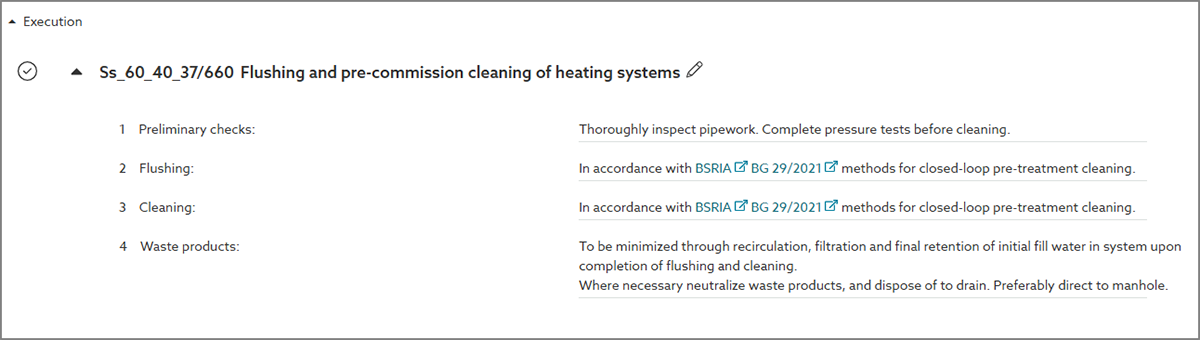
Figure 3: Specifying Closed-loop pre-treatment cleaning to minimise water consumption.
Conclusion – specifying water efficiency from the outset
Water efficient design will gradually take on a similar level of importance as energy efficient design, and the two approaches will complement one another.
The benefits to clients and design teams include enhancing brand reputation (through a demonstration of strong corporate and social responsibility), reduced energy bills, reduced water bills, and even reduced maintenance and insurance costs through early leak detection.
NBS Chorus allows specifiers and designers to capture these principles from early stage project information through to detailed design and specification. This will help to future-proof projects from future regulatory change, and the impact of a growing population and an increasingly unpredictable climate.