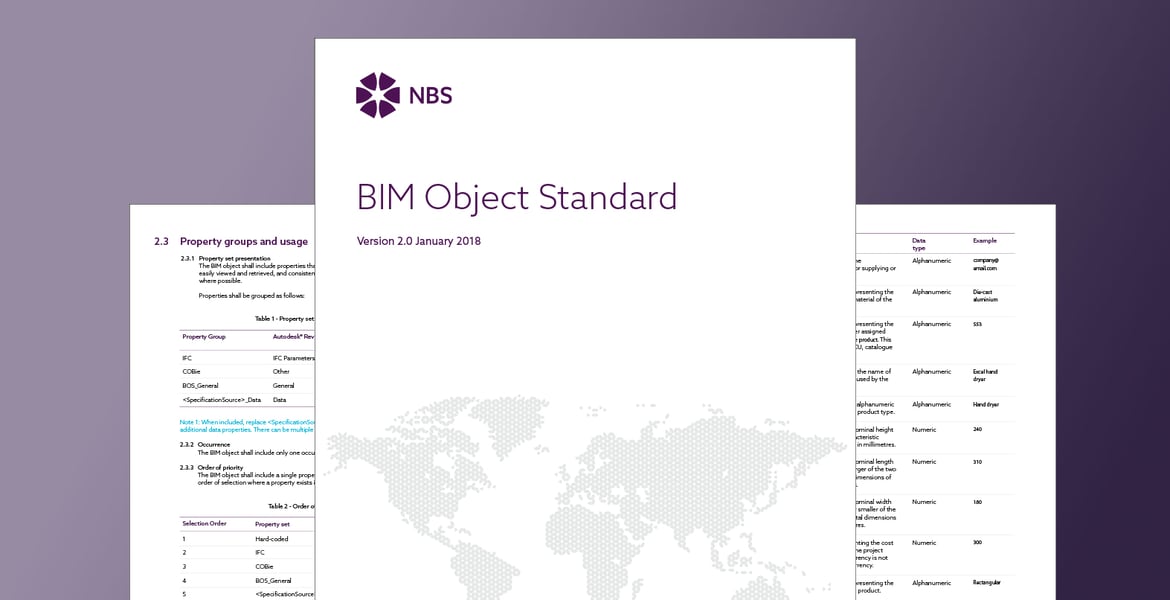
We’ve been making some improvements to the NBS BIM Object Standard. We’ve simplified the structure and reduced some of the requirements. The changes were developed with the help of our Canadian consultation group and are designed to help you meet the NBS BIM Object Standard more easily.
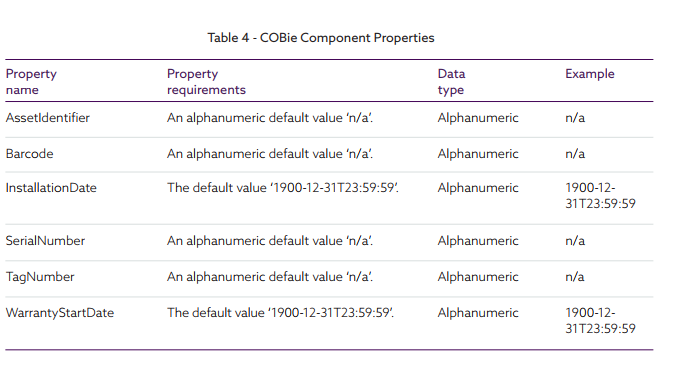
Some of the requirements have been reduced to recommendations. For instance, we’re now recommending that you include IFC properties within an object. It’s no longer a requirement
Recommendations are easy to spot: they’re stated as “should”, while requirements are stated as “shall”.
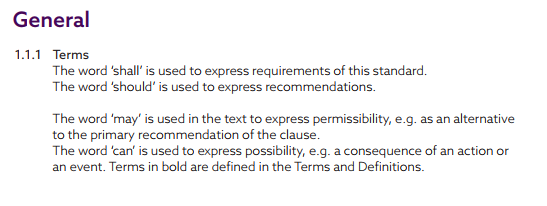
IFC4 schema is still required to identify an object. We’ve created a separate document to help with this process.
The standard now describes how to manage multiple requirements, to better accommodate the different classifications and specification codes that could be applied to an object.
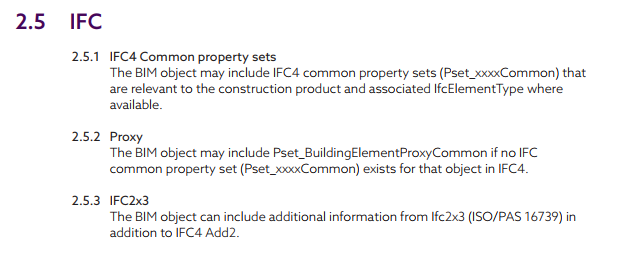
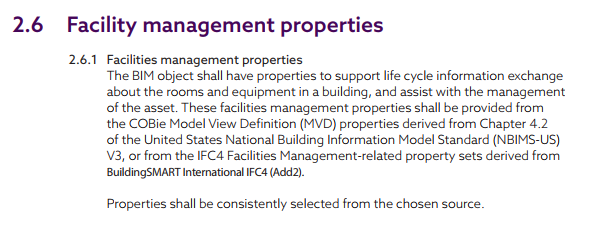
We know that COBIe is not always adopted, so we’ve suggested an alternative way to use IFC Facility Management properties. FM data does not need to be captured within the object, but could be linked to it via the object or supplied in a separate document.
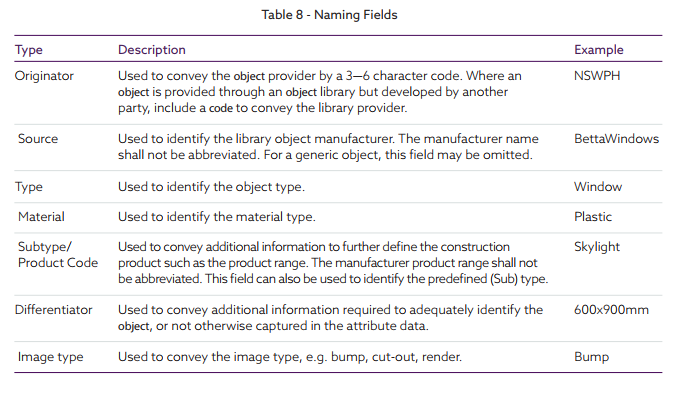
Naming conventions have been simplified to allow the same fields for file, image and material names to be used. They’re now contained within a single table.
The resources available for download from the NBS National BIM Library have also been updated. These resources include Autodesk Revit template files and shared parameter files.
Processes to updating existing BIM objects to the NBS BIM Object Standard 2.0
Follow these steps to update your existing BIM objects to the latest standard:
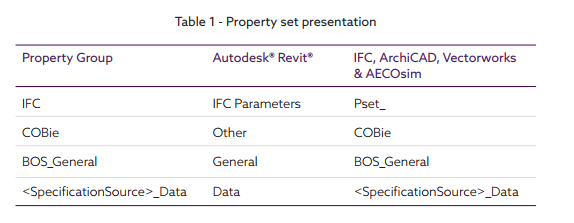
- Update the property group NBS_General to BOS_General.
- Where the properties ExportAs and ExportType have been populated using information from IFC 2X3, update the values from IFC4 following the steps in this article.
Related resources
Download the NBS BIM Object Standard from the NBS National BIM Library