100 years 100 buildings

100 Years 100 Buildings

John Hill

Founder of the A Daily Dose of Architecture blog, John Hill delights in sharing the structures that shape our environment. Here he presents a selection of 'significant' buildings - one from each year spanning 1916 to 2015 inclusive.
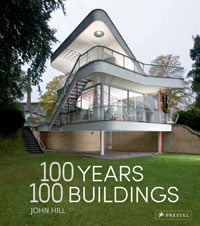
100 Years 100 BuildingsEach structure is detailed over a two-page spread with large colour photographs showing off the best of the building's design, while accompanying text explains the importance of each.

The criteria for inclusion is what makes this collection so special... Each building must be able to be seen, approached or explored...

The criteria for inclusion is what makes this collection so special. Hill insists that each building must be able to be seen, approached or explored by the average person. This is equal parts historical chronicle, architectural tour guide, and design inspiration.

From H.P. Berlage's Holland House in London, considered the first steel-framed building in Europe, to the newly-completed The Broad museum  in Los Angeles and its iconic glass fiber-clad concrete facade, Hill's passion for the subject is evident, and an introductory essay and timeline serves to put the entire collection in context.

100 Years 100 Buildings serves as a catalogue of interesting structures running the whole gamut of design trends, fads and fashions, that serve to demonstrate a range of themes and developments that can still be seen in the world of architecture today.

About this book

100 Years 100 Buildings was published by Prestel in September 2016 and is available to buy from Amazon.co.uk and other booksellers. The title is published in softback (ISBN 978-3791382128).

About the author

John Hill is an architect, editor-in-chief of the Daily News section of World-Architects.com, and founder/ editor-in-chief of the blog A Daily Dose of Architecture, where he publishes daily articles about architecture news and book reviews. He is the author of Guide to Contemporary New York City Architecture.

Our latest articles

Visqueen launches Ultimate Self Adhesive Membrane for hydrocarbon and VOC-contaminated sites

The construction industry faces growing challenges when building on increasingly complex brownfield sites. Alongside the need for effective waterproofing, developers and contractors must now address a wider range of ground contaminants, including hydrocarbons, volatile organic compounds (VOCs), and hazardous ground gases, while maintaining programme efficiency and installation quality. Against this backdrop, Visqueen has expanded its gas protection and waterproofing portfolio with the launch of Visqueen Ultimate Self Adhesive Membrane, a new hydrocarbon and VOC-resistant self-adhesive tanking membrane. Developed as the latest addition to the Visqueen non-foil gas barrier range, the new membrane combines proven gas barrier and waterproofing performance to help specifiers address multiple site challenges with a single solution.

Construction ProductsSponsored

Siderise: Helping to bridge the gap between Gateway 2 approval and on-site fire protection

While the new building safety regime hasn’t fundamentally changed what requirements higher-risk buildings (HRBs) must meet to comply with the Building Regulations, it has significantly increased the breadth, depth and volume of evidence that must be supplied to demonstrate this. As a result, project teams have had to adapt the way they work and even look beyond their roles to understand how their actions may impact the next Dutyholder in the chain. For specifiers, this can include considering what supporting services are offered with life safety-critical elements to enable correct design, installation and maintenance. Early engagement with manufacturer technical specialists can help identify any practical challenges that may arise onsite. Then, during construction, these services can help support the translation of design intent into reality so that buildings are safe for occupation.

Construction ProductsSponsored

RIBA CPD for Architects: Understanding Flooring Specification and Detailing

For architects and specifiers, flooring details can have a significant impact on the safety, accessibility, durability and overall performance of a building. Yet the technical considerations surrounding stairways, floor transitions, and floor finishes are not always straightforward.

RIBA CPDSponsored