All consumer units must meet the requirements of the IET Wiring Regulations Seventeenth Edition Amendment 3 with effect from 1 January 2016.
The regulation
From this date domestic installations should conform to the requirements of BS7671 as per Amendment 3: 2015 regulation 421.1.201.
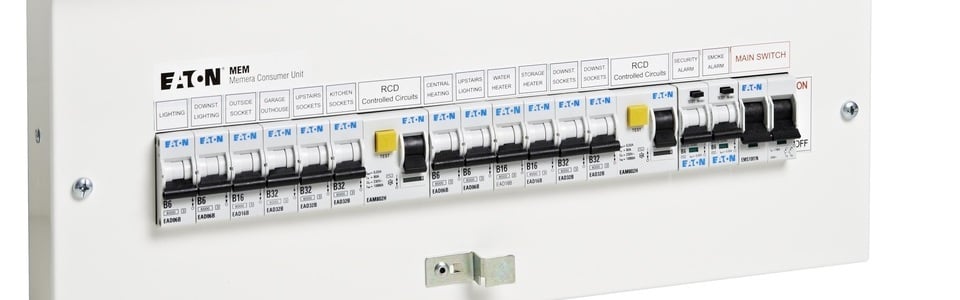
This means that consumer units and similar switchgear assemblies must comply with BS EN 61439-3 and either have:
- the enclosure manufactured from a non-combustible material or
- be contained within a cabinet that is manufactured from a non-combustible material.
An enclosure made from a ferrous metal such as steel is deemed acceptable to meet requirements and either the cabinet or enclosure should form a complete envelope to maintain fire containment.
The intent
In recent times, fire investigators have raised concerns about the increasing number of fires involving thermoplastic enclosures where poor electrical connections (either due to poor workmanship or maintenance) had been found to be responsible.
The new regulation is aimed at trying to contain any fire that may occur within either the consumer unit enclosure or surrounding cabinet to minimise the escape of flames. To this end the sealing of openings into the enclosure or cabinet becomes particularly important under the amended regulations.
The scope
The regulation applies only to ‘domestic (household) premises’. The regulation is not intended to apply to domestic consumer units or similar switchgear assembly that are not within a building such as those mounted outside.Compliance
For the remainder of the year either plastic or metal consumer units can be installed in a domestic premise, although there is nothing precluding earlier compliance with the amended regulations.
From 1 January onwards plastic consumer units can still be fitted but only in non-domestic installations.