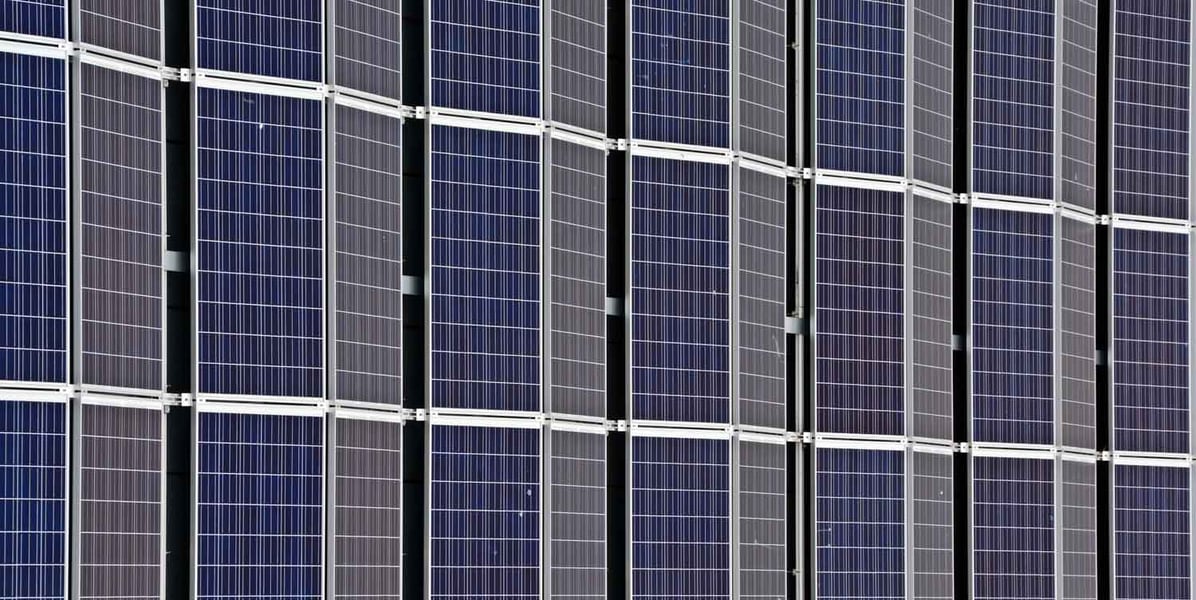
Photovoltaic (PV) technology allows solar energy to be converted directly into electricity. Photovoltaic panels come in a variety of options to suit the varying requirements of structure types; allowing for design flexibility and integrated application.
Polymer PVs are part of what could be construed as a “third wave” of photovoltaics to enter the market; the first two being traditional crystalline silicon cells and their newer thin film varieties. With polymer PVs, there is an opportunity not only to improve upon current solar cell technology but to apply it to applications unsuited to conventional PVs.
Advantages
When compared to silicon PVs, polymers are much lighter in weight and far more flexible, making it easy to tailor their size, shape, and colour. This flexibility also makes them easier to store, transport, and install. Polymer PVs can be rolled out onto a roof or other surfaces, and they are less prone to damage and failure than traditional cells. Being organic, Polymer PVs are also more environmentally friendly.
Disadvantages
The disadvantages include a much lower efficiency rate and far faster degradation. While polymer PVs do fairly well indoors; they suffer serious degradation in outdoor situations. Pottants can help extend their lifespan, but it is still nowhere near what can be achieved with silicon-based cells. That being said, technological advancements indicate great potential for smaller scale commercial applications in the near future.
With polymer PVs, there is an opportunity not only to improve upon current solar cell technology but to apply it to applications unsuited to conventional PVs
Practical applications
A key market being explored is customer electronics: tablets, mobile phones, e-readers, watches, toys, etc. A thin film polymer PV applied to a device allows it to charge in artificial or natural light. Other applications include point of purchase marketing, smart tags, electronic clothing (sportswear, military uniforms, night goggles, etc.), internal building applications, and off-grid use in developing countries.
Recent advancements
Recent advancements in polymer PV technology include:
- Better understanding of how a cell’s individual layers contribute to degradation and how that can be offset.
- Improved photo stability of the active polymer material. By changing the type of polymer material used, scientists increased sun hours from 700 to 4000.
- Increased stability using inverted geometry and metal electrodes. By replacing aluminium or calcium metals with silver, cell degrading oxidation is reduced.
- Improved stability via better morphology control – achieved by chemically cross linking the polymer with PCBM (phenyl C61 butyric acid methyl ester).
While their thinness, flexibility and lower production costs provide a great improvement over traditional solar cells, problems with performance and efficiency currently prohibit their use in typical built environment applications. However, recent improvements mean that polymer PVs have great potential to replace traditional silicon-based panels and become the future market standard.
This short article was created from a longer article on solar cells written for the Construction Information Service.
Interested in the latest advancements in construction products and technologies? Make sure you don't miss out by signing up to receive the NBS eWeekly newsletter. Get the latest content from theNBS.com carefully crafted into a handy weekly email.
Sign up to the NBS eWeekly newsletter