Heritage Open Days set to celebrate England's architecture

Aug 27, 2015 |Richard McPartland

This content is no longer up to date and has been archived.

You may wish to consider searching for newer content

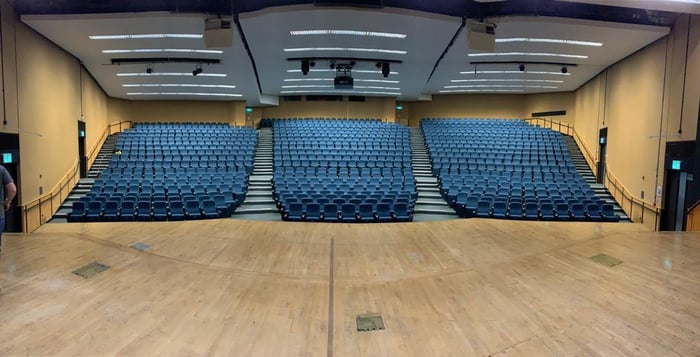
The doors to some of England’s most interesting and unique buildings are set to be thrown open next month as part of the annual Heritage Open Days festival.

Heritage Open Days

From 10 to 13 September, a host of places and spaces – many of which are usually off limits – will be free for visitors to explore.

It’s a once-a-year chance to discover the often hidden or forgotten gems on our doorsteps and enjoy a wide range of tours, events and activities that help bring local history and culture to life.

The event, established in 1994, is managed by the National Trust, and involves more than 1,500 organisations and 40,000 volunteers who between them manage the opening of thousands of individual sites and welcome over 3 million visitors.

The RIBA’s Love Architecture programme externallink joins Heritage Open Days this year to tell the architectural story of buildings – past, present and future, through a series of interpretation boards, talks, architect-led tours and special events taking place across the four-day festival.

Love Architecture was established in 2012 as a festival for architecture and has evolved to become an umbrella for a host of architecturally-themed activities with the aim of engaging the public to engage with and understand more about the places, buildings and spaces near them, all in line with the RIBA’s mission to champion better buildings, communities and the environment through architecture and its members.

For full details of events near you externallink, visit the Heritage Open Days website externallink, which includes an interactive map and print-friendly lists of events by region, country, town or council area.
Our latest articles

Visqueen launches Ultimate Self Adhesive Membrane for hydrocarbon and VOC-contaminated sites

The construction industry faces growing challenges when building on increasingly complex brownfield sites. Alongside the need for effective waterproofing, developers and contractors must now address a wider range of ground contaminants, including hydrocarbons, volatile organic compounds (VOCs), and hazardous ground gases, while maintaining programme efficiency and installation quality. Against this backdrop, Visqueen has expanded its gas protection and waterproofing portfolio with the launch of Visqueen Ultimate Self Adhesive Membrane, a new hydrocarbon and VOC-resistant self-adhesive tanking membrane. Developed as the latest addition to the Visqueen non-foil gas barrier range, the new membrane combines proven gas barrier and waterproofing performance to help specifiers address multiple site challenges with a single solution.

Construction ProductsSponsored

Siderise: Helping to bridge the gap between Gateway 2 approval and on-site fire protection

While the new building safety regime hasn’t fundamentally changed what requirements higher-risk buildings (HRBs) must meet to comply with the Building Regulations, it has significantly increased the breadth, depth and volume of evidence that must be supplied to demonstrate this. As a result, project teams have had to adapt the way they work and even look beyond their roles to understand how their actions may impact the next Dutyholder in the chain. For specifiers, this can include considering what supporting services are offered with life safety-critical elements to enable correct design, installation and maintenance. Early engagement with manufacturer technical specialists can help identify any practical challenges that may arise onsite. Then, during construction, these services can help support the translation of design intent into reality so that buildings are safe for occupation.

Construction ProductsSponsored

RIBA CPD for Architects: Understanding Flooring Specification and Detailing

For architects and specifiers, flooring details can have a significant impact on the safety, accessibility, durability and overall performance of a building. Yet the technical considerations surrounding stairways, floor transitions, and floor finishes are not always straightforward.

RIBA CPDSponsored