BIM for Construction Health and Safety
Mar 15, 2017 |Richard McPartland

BIM for Construction Health and Safety

Stefan Mordue and Roland Finch
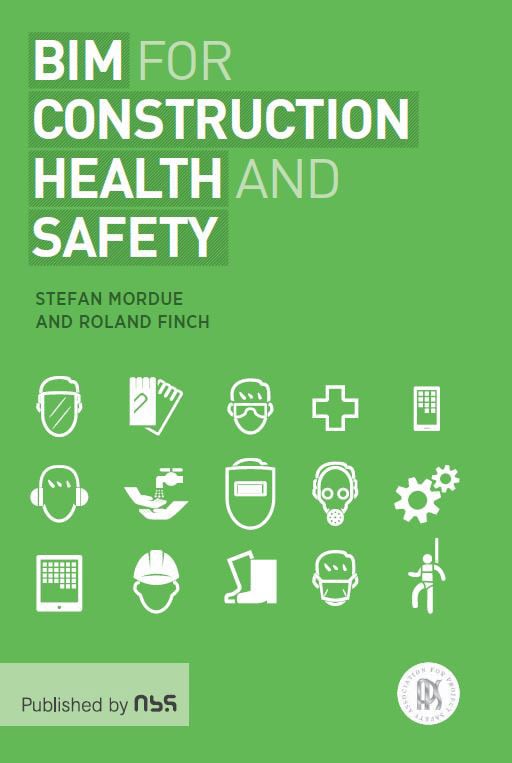
bimhealthsafetybookcoverThe digital construction revolution affords us opportunity to make better and safer decisions by way of more collaborative working, rethinking what we do and how we do it, and making use of data to power our Building Information Model.

With far too many people killed or injured in the construction industry each year the potential benefits of improved health and safety are so great as to be almost unquantifiable. With a new PAS (PAS 1196-6) currently open for comment it seemed like an appropriate time to revisit this offering from RIBA Publishing that first hit the bookshelves back in 2014.

For health and safety advisors (HSAs) looking for a primer on BIM basics and the possibilities, BIM for Construction Health and Safety is, quite simply, a must-read. Mordue and Finch show in practical detail how health and safety information can be incorporated and considered within the BIM process and the resulting data manipulated to drive better decision making.

Using the development of Hadlow College's Rural Regeneration Centre as a case study serves as a useful way to bring together the topics introduced, showing how BIM can really help keep health and safety in strong focus across the project life cycle.

The result? A book that serves as a clarion call for HSAs to embrace BIM to enhance their reputations and embed their role firmly within the construction process, espousing the kind of principles that are found in PAS 1192-6 and potentially saving lives in the process. For everyone else, BIM for Construction Health and Safety remains an accessible and thoughtful reminder of how to effectively consider health and safety within a BIM workflow.

About this book

BIM for Construction Health and Safety was published by RIBA Publishing in April 2014 and is available to buy from RIBA Bookshops, in paperback (ISBN 9781859465288) priced £25 and as an ebook priced £20.

About the authors

Stefan Mordue, BA DipARch MSc RMaPS MAPM RIBA is a chartered architect, qualified construction project manager, registered CDM Co-ordinator and has a background in small architectural practice. He is currently Business Solutions Consultant at NBS.

Roland Finch, BSc FRICS, ACIArb is a chartered quantity surveyor with over 30 years' construciton industry experience in the public and private sectors. He authors NBS Preliminaries and Project Management content.

Our latest articles

Visqueen launches Ultimate Self Adhesive Membrane for hydrocarbon and VOC-contaminated sites

The construction industry faces growing challenges when building on increasingly complex brownfield sites. Alongside the need for effective waterproofing, developers and contractors must now address a wider range of ground contaminants, including hydrocarbons, volatile organic compounds (VOCs), and hazardous ground gases, while maintaining programme efficiency and installation quality. Against this backdrop, Visqueen has expanded its gas protection and waterproofing portfolio with the launch of Visqueen Ultimate Self Adhesive Membrane, a new hydrocarbon and VOC-resistant self-adhesive tanking membrane. Developed as the latest addition to the Visqueen non-foil gas barrier range, the new membrane combines proven gas barrier and waterproofing performance to help specifiers address multiple site challenges with a single solution.

Construction ProductsSponsored

Siderise: Helping to bridge the gap between Gateway 2 approval and on-site fire protection

While the new building safety regime hasn’t fundamentally changed what requirements higher-risk buildings (HRBs) must meet to comply with the Building Regulations, it has significantly increased the breadth, depth and volume of evidence that must be supplied to demonstrate this. As a result, project teams have had to adapt the way they work and even look beyond their roles to understand how their actions may impact the next Dutyholder in the chain. For specifiers, this can include considering what supporting services are offered with life safety-critical elements to enable correct design, installation and maintenance. Early engagement with manufacturer technical specialists can help identify any practical challenges that may arise onsite. Then, during construction, these services can help support the translation of design intent into reality so that buildings are safe for occupation.

Construction ProductsSponsored

RIBA CPD for Architects: Understanding Flooring Specification and Detailing

For architects and specifiers, flooring details can have a significant impact on the safety, accessibility, durability and overall performance of a building. Yet the technical considerations surrounding stairways, floor transitions, and floor finishes are not always straightforward.

RIBA CPDSponsored