Global capacity to generate electricity from renewable sources has, for the first time, overtaken coal according to a new study from the International Energy Agency (IEA).
Thanks to strong policy support in key countries and sharp cost reductions and it's a trend the agency expect to continue. The sector is expected to grow 13% more between 2015 and 2021 - an increase on previous forecasts - due mostly to stronger policy backing in the United States, China, India and Mexico and falling costs for solar PV and onshore wind.
The latest edition of the IEA's Medium-Term Renewable Market Report charts a pivotal year for renewables with more than half of the total global new power capacity coming from eco-friendly sources and reaching a record 153 Gigawatts (GW) - a 15% increase on the previous year. Most of these gains were driven by record-level wind additions of 66 GW and solar PV additions of 49 GW.
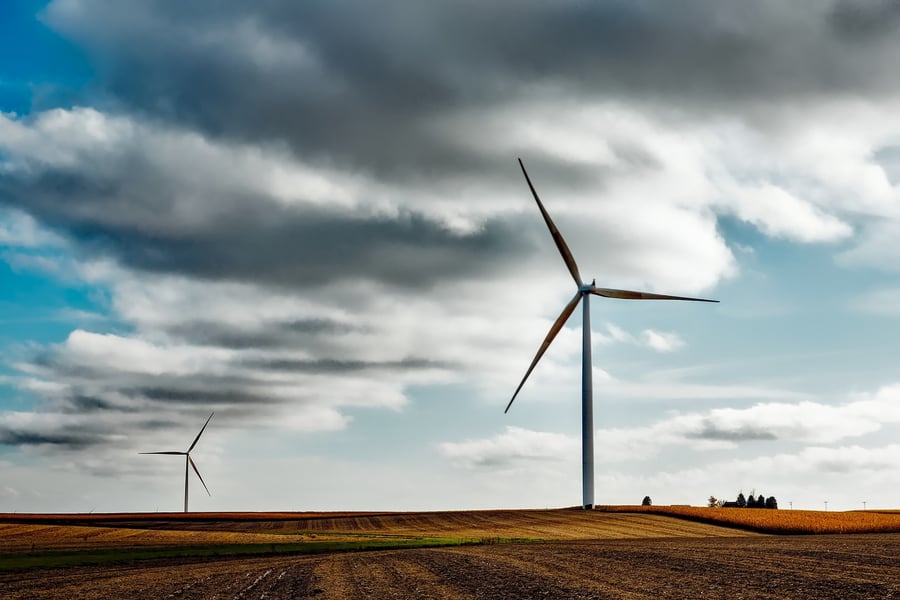
About half a million solar panels were installed every day around the world last year. In China, which accounted for about half the wind additions and 40% of all renewable capacity increases, two wind turbines were installed every hour in 2015.
We are witnessing a transformation of global power markets led by renewables and, as is the case with other fields, the center of gravity for renewable growth is moving to emerging markets.
Dr Fatih Birol, Executive Director, IEA
The agency highlights a number of factors for the growth in renewables: more competition, enhanced policy support in key markets, and technology improvements. That said, while climate change mitigation is a powerful driver for renewables, it is not the only one. In many countries, cutting air pollution and diversifying energy supplies to improve energy security play an equally strong role in growing low-carbon energy sources, especially in emerging Asia.
Over the next five years, renewables will remain the fastest-growing source of electricity generation, with their share extpected to rise to 28% by 2021 - up from 23% in 2015.
But while 2015 was an exceptional year, there are still grounds for caution. Policy uncertainty persists in too many countries, slowing down the pace of investments. Rapid progress in variable renewables such as wind and solar PV is also exacerbating system integration issues in a number of markets; and the cost of financing remains a barrier in many developing countries. And finally, progress in renewable growth in the heat and transport sectors remains slow and needs significantly stronger policy efforts.
The IEA also sees a two-speed world for renewable electricity over the next five years. While Asia takes the lead in renewable growth, this only covers a portion of the region’s fast-paced rise in electricity demand. China alone is responsible for 40% of global renewable power growth, but that represents only half of the country’s electricity demand increase.
This is in sharp contrast with the European Union, Japan and the United States where additional renewable generation will outpace electricity demand growth between 2015 and 2021.