A report has set out possible options for the restoration of the Palace of Westminster at significant cost to the taxpayer. We explore some of the options.
The neo-Gothic splendour of the Palace of Westminster is starting to show its age and slowly sinking into the River Thames. Little restoration has taken place since the post-war era as successive generations have kicked big decisions (and big spending) into the long grass and the time of reckoning is nigh.
A 2012 study indicated that unless significant restoration work was undertaken, major and irreversible damage could be done, citing a catalogue of problems ranging from crumbling brickwork, corroded roof trusses and the widespread use of asbestos.
With doing nothing no longer an option, the authorities of both houses commissioned a comprehensive and independent assessment of possible options at the end of 2014. That report, prepared by Aecom, Deloitte Real Estate and HOK architects, was published last week and sets out five potential scenarios with a minimum pricetag of £3.5bn. These options are summarised below:
| Programme type | What's included | Estimated cost | Time taken |
| Rolling programme | Minimum standards, including fire containment, improved lifts and step-free access to most areas | £5.7bn (construction and delivery £1.3bn) | 32 years |
| Partial move out | Minimum standards, including fire containment, improved lifts and step-free access to most areas | £3.9bn (construction and delivery £1.1bn) | 11 years |
| Partial move out | Minimum standards, including fire containment, improved lifts and step-free access to most areas plus some improvements to business and public amenities | £4.4bn (construction and delivery £1.2bn) | 11 years |
| Full move out | Minimum standards, including fire containment, improved lifts and step-free access to most areas plus some improvements to business and public amenities | £3.5bn (construction and delivery £1bn) | 6 years |
| Full move out | Renovation with significant improvements | £3.9bn (construction and delivery £1.1bn) | 6 years |
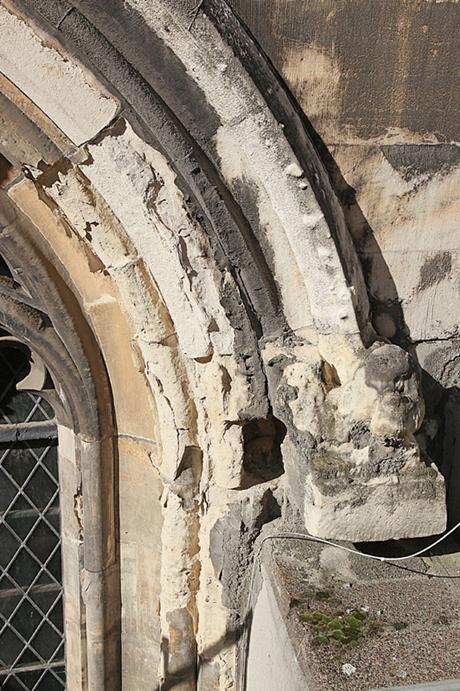
Weathering and atmospheric damage has ravaged the
stonework. (Parliamentary copyright/ Adam Watrobski)
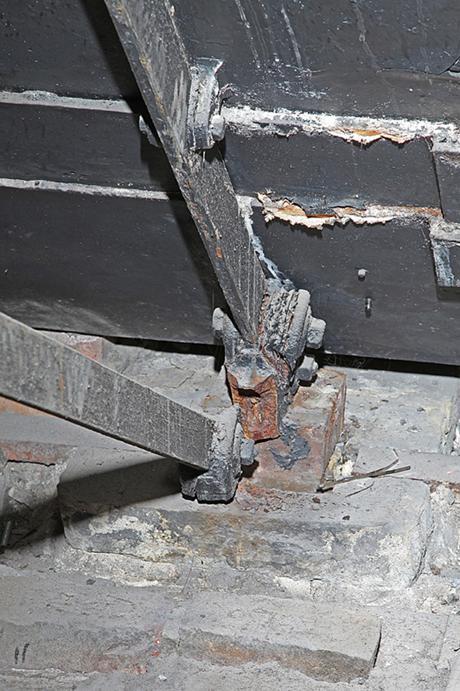
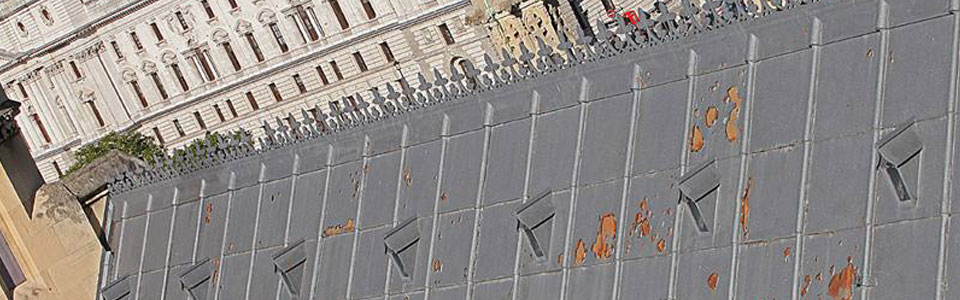
Cast iron roofs are a rare example of their kind, but have seen
better days. (Parliamentary copyright/ Adam Watrobski)
Decanting MPs and Peers from the World Heritage Site would provide most scope for substantial improvement in the shortest timeframe but if that proves unpalatable then costs increase and the scope of what's possible decreases.
The Queen Elizabeth II conference centre, owned by the Department for Communities and Local Government, has been suggested as a possible temporary home for Parliament if one or both chambers move out, though there's also been suggestion that a move North could be worth considering.
Whatever is decided, the scale of the engineering challenge cannot be under-estimated – with substantial upgrade of mechanical and electrical equipment, major restoration of the Grade 1 Listed cast iron roofs, and repairs to counter the effects of weathering and atmospheric damage to the stonework all needing to be considered.
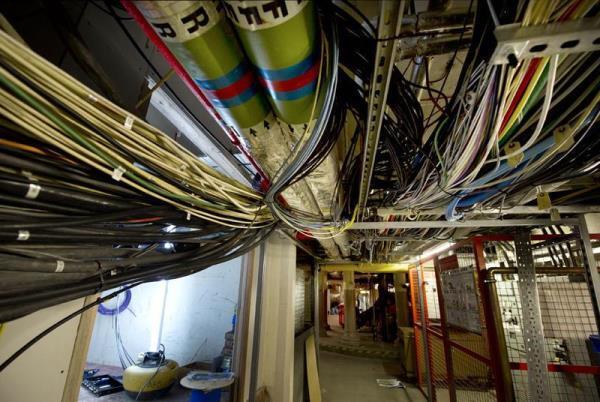
A substantial overhaul of mechanical and electrical equipment will be required.
(Parliamentary copyright/ Catherine Bebbington)
The Independent  reports that British engineering groups including Mace, Arup and WS Atkins are considering placing bids for the work. US firms Bechtel (who have worked on London Underground) and CH2M Hill (who worked with Mace on construction for the 2012 Olympic Games) are also said to be in the frame.
A review committee has now been established and is expected to announce its preferred option for refurbishment by the end of the year allowing a delivery partner to be selected in 2016 with a view to work commencing at the turn of the decade once due diligence work has been completed.