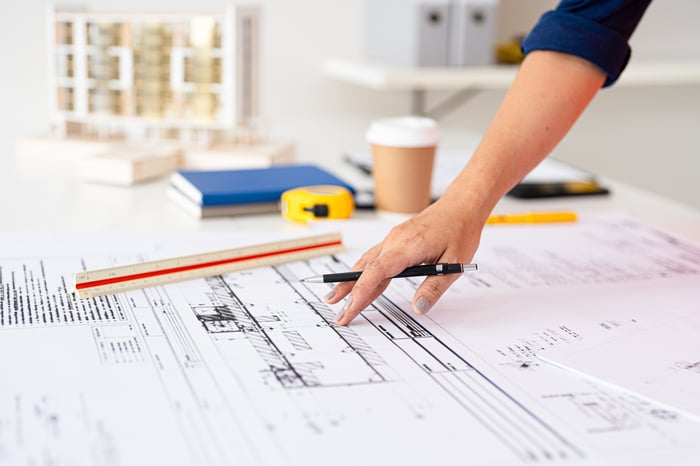
The programme places BIM in its context as a technical response to attempts to increase coordination in architectural design, outlining the JCT's recent Constructing Excellence Contract and explaining BS 1192 Collaborative production of architectural, engineering and construction information published in 2007.
This is followed by a basic explanation of what BIM is, how it aids collaboration, and the concept of parametrics as opposed to standard CAD methodology.
The programme then takes a closer look at what BIM can do, including a look at the benefits and technicalities of 'intelligent relationships'. It also explores whether there are situations where the use of BIM may not be appropriate, and clarifies the time and effort required to adopt BIM as a new working practice. The programme concludes with an assessment of imminent developments of BIM and intelligent modelling.
Visqueen launches Ultimate Self Adhesive Membrane for hydrocarbon and VOC-contaminated sites
The construction industry faces growing challenges when building on increasingly complex brownfield sites. Alongside the need for effective waterproofing, developers and contractors must now address a wider range of ground contaminants, including hydrocarbons, volatile organic compounds (VOCs), and hazardous ground gases, while maintaining programme efficiency and installation quality. Against this backdrop, Visqueen has expanded its gas protection and waterproofing portfolio with the launch of Visqueen Ultimate Self Adhesive Membrane, a new hydrocarbon and VOC-resistant self-adhesive tanking membrane. Developed as the latest addition to the Visqueen non-foil gas barrier range, the new membrane combines proven gas barrier and waterproofing performance to help specifiers address multiple site challenges with a single solution.
Construction ProductsSponsored
Siderise: Helping to bridge the gap between Gateway 2 approval and on-site fire protection
While the new building safety regime hasn’t fundamentally changed what requirements higher-risk buildings (HRBs) must meet to comply with the Building Regulations, it has significantly increased the breadth, depth and volume of evidence that must be supplied to demonstrate this. As a result, project teams have had to adapt the way they work and even look beyond their roles to understand how their actions may impact the next Dutyholder in the chain. For specifiers, this can include considering what supporting services are offered with life safety-critical elements to enable correct design, installation and maintenance. Early engagement with manufacturer technical specialists can help identify any practical challenges that may arise onsite. Then, during construction, these services can help support the translation of design intent into reality so that buildings are safe for occupation.