Restoring Carver's Warehouse

Oct 7, 2011 |NBS

Carver's Warehouse is one of the most important listed buildings in Manchester's industrial heritage. Built in 1806, the stone-built structure retains virtually all of its original timber and cast iron internal structure. The challenge for owner Town Centre Securities was to restore the building back to its former glory, but to do so in a way that made the development commercially viable. Key to the project was the addition of a new two storey building and atrium of contemporary design linking into the 19th century building.

As Carver's Warehouse is a listed building, there were considerable constraints on its restoration and development. In order to maintain each of the floor plates as open as possible and to minimise disturbance to the old structure, it was decided to provide vertical circulation external to the original building. This was achieved by demolishing a non-listed block of two storey terrace buildings adjacent to the warehouse. In its place, the new two storey pre-cast concrete and steel building and four storey steel and structural glass atrium were constructed. The two storey section provides the main entrance, meeting rooms and a café, while the atrium provides additional entrances, stairs and access bridges to the warehouse.

In this exclusive extract from a programme detailing the project, we give an overview of this sensitive project.
Our latest articles

Designing sustainability into construction – proof over promises in sustainable construction

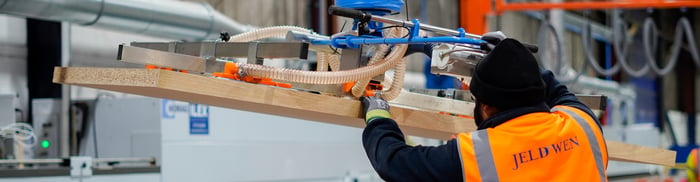
With tightening regulations and growing client demand, the construction industry is under increasing pressure to demonstrate measurable progress against carbon reduction targets. For specifiers, that means ensuring every product installed stands up to scrutiny, not just in material, but in source, traceability, and lifetime carbon footprint. JELD-WEN, a specialist timber door, door kit and doorset manufacturer, explains the critical considerations when selecting sustainable materials.

Sponsored

Dulux Trade launches new solution for high-humidity spaces

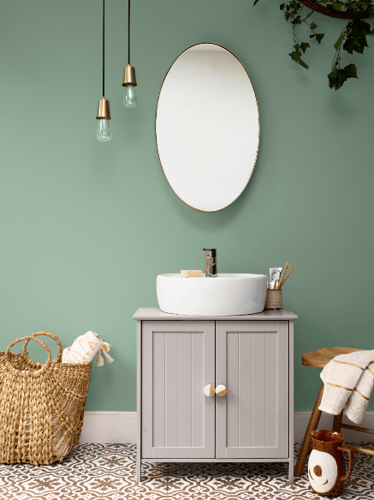
Because of how they are used, kitchens and bathrooms experience more moisture, more contact, and more ongoing maintenance. Standard emulsions are not designed for this level of use. Over time, finishes can lose their appearance or fail to cope with the environment. Kitchens and bathrooms benefit best using a product formulated specifically for their daily demands.

Construction ProductsSponsored

The hidden cost of compliance: why architects are demanding a new era of product transparency

Few pieces of legislation have reshaped the UK construction industry as significantly as the Building Safety Act 2022 (BSA). Introduced to improve accountability, traceability and safety standards across the built environment, the legislation has fundamentally changed the responsibilities placed on architects, contractors and manufacturers. While the principles behind the Act are widely supported, the reality for architectural practices is proving more challenging than many anticipated.