
Print this page and get your writing implement of choice at the ready, set to tackle the grid of BIM-fuelled dreams..
The crossword
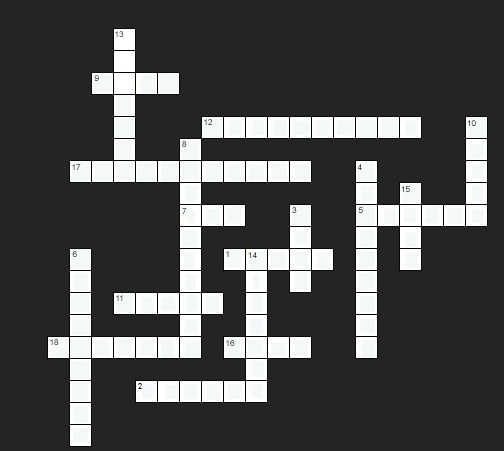
| Across |
Down |
| 1. Process of identifying conflicts and issues through 3D collaboration and co-ordination. ----- (5) detection. |
3. BIM ---- (4). The act of deliberately or intentionally overinflating a person or organisation’s BIM ability. |
| 2. The act of retrospectively applying a BIM process to an existing project. ------ (6) | 4. A piece of data that defines a property or characteristic of an object, element or file. --------- (9) |
| 5. The Internet of ------ (6). The concept of everyday physical objects that are connected to the internet and have the ability to identify themselves to other devices. | 6. This kind of model consists of linked individual models and other information to create a single model of the asset. --------- (9) |
| 7. A neutral, non-proprietary data schema developed by buildingSMART to define, describe, exchange and share information. --- (3) | 8. The collective term used to describe level of detail and level of information. Level of ---------- (10). |
| 9. A collection of data exported from the BIM at a particular stage in a particular format and in level of definition. Data ---- (4) | 10. A shared generic framework for the key project stages where the project team can assign roles and responsibilities. Plan of ----- (5) |
| 11. Clear questions the client asks the supply chain during the key stages of a project. ----- (5) Language Questions. | 13. Simulation of the construction process using computerised models and techniques. ------- (7) design and construction. |
| 12. This kind of design is about using rule-based relationships between intelligent objects that enable the project team to update related properties when one property changes. ---------- (10) modelling. | 14. Collection of reusable predefined assets such as objects, material and textures that can be imported into a BIM platform. ------- (7). |
| 16. A single source of information, such as a project extranet where project information is collected and shared among the project team. The common ---- (4) environment. | 15. A document prepared by individual teams containing a federated list of information deliverables for each task including format, date and responsibilities. ---- (4). |
| 17. A tangible or intangible quantifiable outcome that’s provided to a receiving party. ----------- (11) | |
| 18. Delivering the UK’s Level 3 Strategic Plan – Digital Built ------- (8). |

Finished already? Check the answers (www.thenbs.com/bimcrosswordanswers) and let us know how many you got right... tweet your score @theNBS for BIM bragging rights.