Jul 17, 2011 |NBS

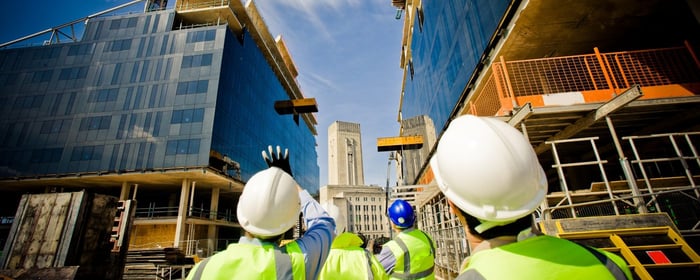
A government drive to make all new schools 'zero carbon' by 2016 was called into question at the end of 2008, when tests revealed CO2 levels in some new classrooms had exceeded recommended average levels by up to 3.5 times. Professor Derek Clements-Croome, leader of the group conducting the research, went on to claim that 'There is no point pushing for energy reduction if kids are falling asleep'. But is there really a contradiction between a healthy ventilation management system, energy efficiency and learning environments? This programme takes a look at the current state of ventilation in schools. It provides the official framework – explaining Building Bulletin 101 (BB101) 'Ventilation in Schools' and showing how it relates to Building Regulations Approved Document F 'Ventilation' – as well as showing the main sources of carbon emissions from schools and discussing permissible levels of CO2. Controllable ventilation rates in schools are examined in detail, while the practicality of natural ventilation is considered. Methods of modelling ventilation systems are also investigated.

About the contributors

Paddy Conaghan is a partner at Hoare Lea Consulting Engineers.

Dr Shaun Fitzgerald was a senior researcher at the BP Institute in Cambridge and the Cambridge-MIT Institute.


RIBA CPDDisclaimer: NBS TV programmes are the intellectual property of RIBA Enterprises and it shall be a breach of this right to copy, or in any way exploit commercially or show in public any of the programmes without the express permission of RIBA Enterprises.
The information contained in the programmes is not intended and accordingly shall not be relied upon either as a substitute for professional advice or judgement or to provide legal or other advice with respect to any particular circumstance. RIBA Enterprises accepts no responsibility for loss occasioned to any person acting or refraining from action as a result of the information contained in the programmes.
 

Our latest articles

Designing sustainability into construction – proof over promises in sustainable construction

With tightening regulations and growing client demand, the construction industry is under increasing pressure to demonstrate measurable progress against carbon reduction targets. For specifiers, that means ensuring every product installed stands up to scrutiny, not just in material, but in source, traceability, and lifetime carbon footprint. JELD-WEN, a specialist timber door, door kit and doorset manufacturer, explains the critical considerations when selecting sustainable materials.

Sponsored

Dulux Trade launches new solution for high-humidity spaces

Because of how they are used, kitchens and bathrooms experience more moisture, more contact, and more ongoing maintenance. Standard emulsions are not designed for this level of use. Over time, finishes can lose their appearance or fail to cope with the environment. Kitchens and bathrooms benefit best using a product formulated specifically for their daily demands.

Construction ProductsSponsored

The hidden cost of compliance: why architects are demanding a new era of product transparency

Few pieces of legislation have reshaped the UK construction industry as significantly as the Building Safety Act 2022 (BSA). Introduced to improve accountability, traceability and safety standards across the built environment, the legislation has fundamentally changed the responsibilities placed on architects, contractors and manufacturers. While the principles behind the Act are widely supported, the reality for architectural practices is proving more challenging than many anticipated.